It’s a moment that can leave any parent feeling frustrated and a little embarrassed: your child spits. Whether it’s at you, a sibling, or a friend, this behavior can be startling and difficult to manage. The good news is that you are not alone, and there are effective ways to address this phase. Understanding the root cause is the first step toward finding a lasting solution. This guide will explore why children spit and offer practical parenting solutions to help you navigate this tricky stage. We will look into the common causes and triggers behind this behavior. Then, we’ll provide actionable advice on how to stop a child from spitting, helping you restore peace and teach more appropriate ways to express feelings.
Why Do Children Spit? Uncovering the Causes
Spitting is a common, though unpleasant, phase for many young children. To effectively address the spitting behaviour in children, it’s helpful to understand what’s behind it. Often, it’s not about defiance but about development and communication.
1. Experimentation and Sensory Exploration
For babies and toddlers, the world is a giant sensory playground. They learn by exploring with their mouths. Discovering they can produce and propel spit can be a fascinating new skill. They might repeat the action simply to see what happens, exploring the cause-and-effect nature of their own bodies.
2. Lack of Verbal Skills
The spitting behaviour in toddlers and preschoolers often stems from an inability to express complex emotions. Big feelings like anger, frustration, or even excitement can be overwhelming. Without the words to say, “I’m angry,” or “You’re in my space,” a child might resort to a physical act like spitting to get their point across. It’s a primitive but effective way to communicate a strong feeling.
3. Seeking Attention
Children crave attention, and they aren’t always particular about whether it’s positive or negative. If a child feels ignored or wants to engage with you, they might learn that spitting gets an immediate, strong reaction. This becomes a powerful, if undesirable, tool for gaining the spotlight. Knowing how to manage spitting behavior in toddlers involves recognizing if it’s a plea for connection.
4. Mimicking Others
Children are excellent mimics. They may have seen another child, a character on a show, or even an adult spit. They might be copying the behavior without understanding the social implications, simply replicating an action that seemed interesting or got a reaction.
Common Triggers for Spitting Behavior

Identifying the specific situations that lead to spitting is key to preventing it. Pay attention to when the spitting occurs. Does a pattern emerge? Common triggers include:
- Frustration: A child might spit when a toy is taken away or they can’t get something to work.
- Anger: Disagreements with siblings or playmates are a frequent cause.
- Overstimulation: A noisy, crowded environment can be overwhelming, leading to behaviors like spitting as a way to cope or create space.
- Tiredness or Hunger: Just like adults, kids’ self-control diminishes when they are tired or hungry. This can lead to a lower tolerance for frustration and an increase in challenging behaviors.
- Feeling Powerless: Sometimes, spitting can be a child’s attempt to assert control in a situation where they feel they have none.
Practical Parenting Solutions to Stop a Child From Spitting

Once you have a better idea of the “why” behind the behavior, you can implement targeted strategies. Here are some effective spitting kids behaviour solutions.
1. Stay Calm and Act Immediately
Your reaction is crucial. While it’s natural to feel angry, a big, emotional response can inadvertently reward the behavior by providing the attention the child may be seeking. Instead, aim for a calm, firm, and consistent reaction.
Get down to your child’s level, make eye contact, and say something simple and direct like, “No spitting. Spitting is not okay.” Avoid a long lecture, as young children will tune it out. The goal is to be clear and concise.
2. Teach Alternative Ways to Express Feelings
A core part of learning how to stop a child from spitting is giving them a replacement behavior. If your child spits when angry, teach them to use their words. You can give them phrases like, “I’m mad!” or “I need space.”
For younger toddlers, actions might be more effective. Teach them to stomp their feet, clap their hands, or go to a “calm-down corner” when they feel a big emotion coming on. Role-playing these scenarios when everyone is calm can be very effective.
3. Use Natural Consequences
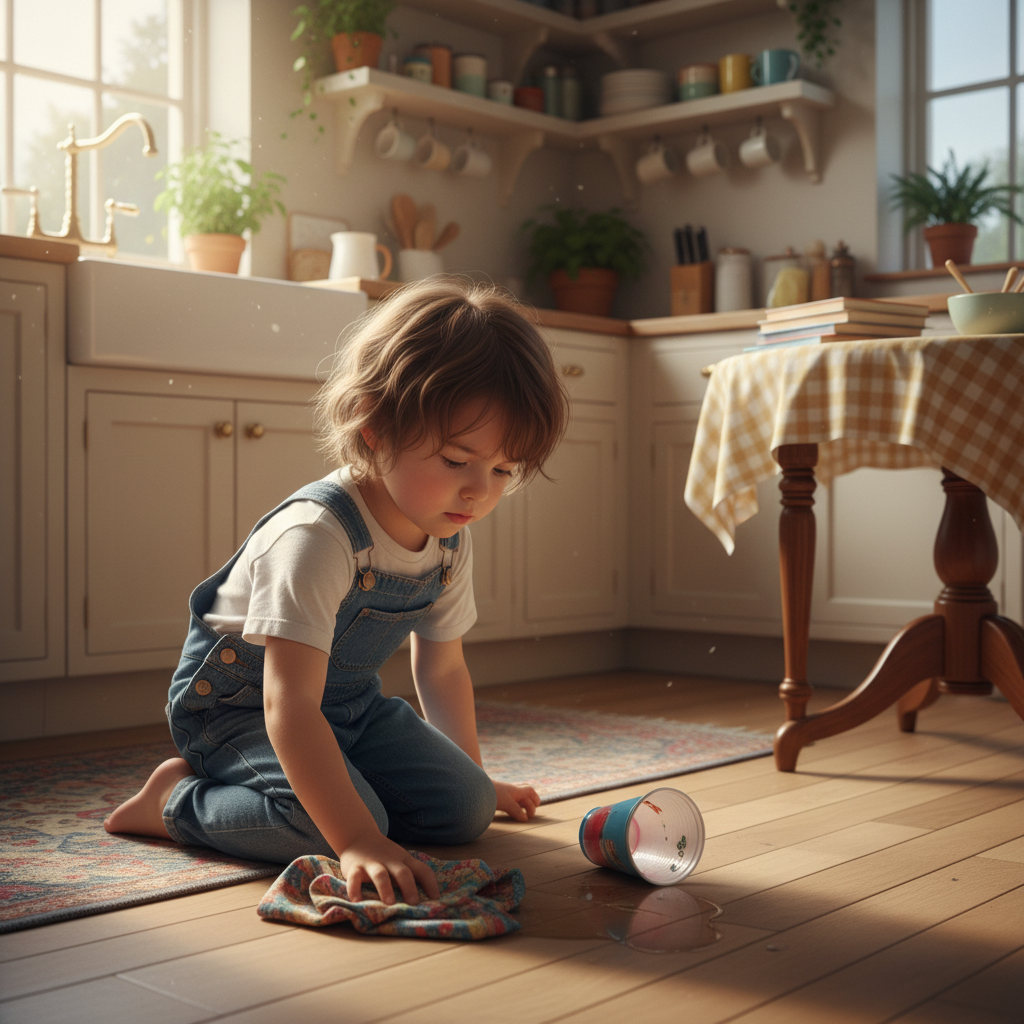
Connect the consequence directly to the action. If the child spits on a toy, the toy gets put away for a little while. If they spit on a person, they need to help clean it up (with a cloth and water, for example) and then take a break from playing with that person. This helps them understand the direct impact of their actions.
4. Reinforce Positive Behavior
Catch your child being good! When they use their words instead of spitting, or manage a frustrating situation without resorting to it, offer specific praise. Say, “I saw you were getting frustrated with that puzzle, and you took a deep breath. That was a great choice!” This positive reinforcement encourages them to repeat the desired behavior. Finding ways to manage spitting in kids is as much about building good habits as it is about stopping bad ones.
5. Create a “Spit-Friendly” Zone (If Appropriate)
For some children, the sensory aspect of spitting is the main draw. You can’t let them spit on people, but you can give them an acceptable place to do it. You could say, “We don’t spit on people. If you need to spit, you can do it in the sink/outside in the grass.” This validates their curiosity while reinforcing clear boundaries. This strategy helps you manage spitting behavior in toddlers by redirecting the impulse rather than just trying to suppress it.
When to Seek Further Help
While the spitting behaviour in toddlers and preschoolers is often a temporary phase, there are times when it might signal a deeper issue. If the spitting is persistent, aggressive, and doesn’t respond to any of the strategies you’ve tried over several weeks, it may be beneficial to speak with a pediatrician or a child development specialist. They can help rule out any underlying developmental or sensory processing issues and provide more tailored guidance.
Ultimately, learning how to stop a child from spitting requires patience, consistency, and a focus on teaching, not just punishing. By understanding the root causes and offering your child better tools to cope with their feelings, you can guide them through this challenging phase and toward more positive forms of expression.
Disclaimer: This content was automatically imported from a third-party source via RSS feed. The original source is: https://thechampatree.in/blog/parenting/is-your-child-spitting-heres-exactly-what-to-do/. xn--babytilbehr-pgb.com does not claim ownership of this content. All rights remain with the original publisher.