Wearable breast pumps are everywhere right now, and I get it. They’re sleek, hands-free, and incredibly convenient. You can pump in a meeting, in the car, at the grocery store, and pretty much anywhere. For many moms, they feel like the obvious choice when choosing a breast pump.
But as a postpartum doula of 15 years, I’ve seen what often gets overlooked. While wearables are convenient, they are not designed to be a primary pump. In the early weeks, when your milk supply is being established, the type of pump you need is one that is strong and helps build your milk supply. This is why choosing the right pump matters more than most moms realize.
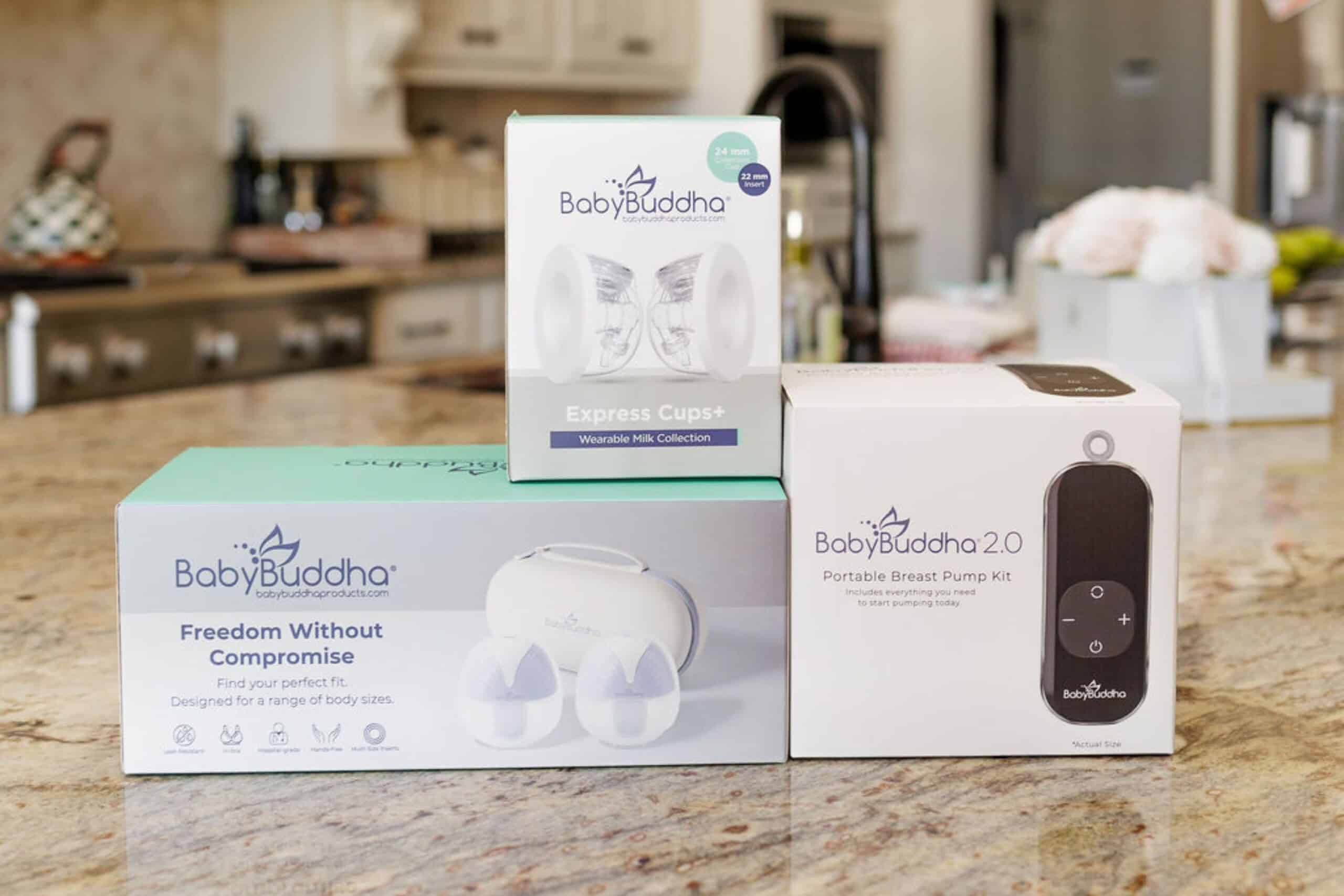
After testing BabyBuddha’s lineup — including their 2.0 primary portable pump, wearable pump, and collection cups — I want to walk you through how each option works, when it makes sense to use them, and how the right setup can support your supply for the long term.
Why a Primary Breast Pump Matters
If you’re wondering what a “primary pump” means, it’s typically a hospital-strength or high-powered double electric pump built with a strong motor and effective suction pattern to fully stimulate and empty the breasts. It includes an external motor, tubing, flanges, and collection cups, and usually requires you to sit down and pump. A primary pump is designed to be your main milk removal tool, especially in the early postpartum weeks.
The thing is, a lot of moms don’t realize how important that early choice can be. The first 10–14 days after birth are critical. This is when your body is establishing your long-term milk supply. During that window, consistent and effective milk removal tells your body how much milk to make going forward, and a strong primary pump, along with frequent breastfeeding, supports that process.
I’ve worked with moms who relied solely on a wearable breast pump in those early weeks because they thought it would be easier and possibly better. By week three or four, many were frustrated that their supply wasn’t where they hoped it would be. When I helped them switch to a stronger primary pump and focus on full, consistent emptying, their supply improved.

Effectively and frequently emptying your breasts matters because milk supply is built on demand. Remember that milk removal equals milk production. The more you bring your baby to the breast or use a pump, the more you are signaling your body to make milk.
Not all breast pumps are created equal. Motor strength, suction pattern, flange fit, and consistency matter deeply in your pumping journey. If milk isn’t being removed well, your supply can suffer. And the opposite is also true. When milk is removed consistently and effectively, your supply is protected and strengthened. That’s why I always recommend moms secure a strong primary breast pump through insurance first.
A strong primary pump mimics baby’s natural suck pattern more effectively, provides consistent suction, empties the breasts efficiently, and helps stimulate milk production if baby isn’t nursing well yet. Most importantly, it protects your milk supply during those critical early weeks when your body is learning how much milk it needs to make.
Wearables are amazing tools. However, they are not designed to be your pumping foundation. They serve a different purpose.
Where Wearables Fit Into the Pumping Picture
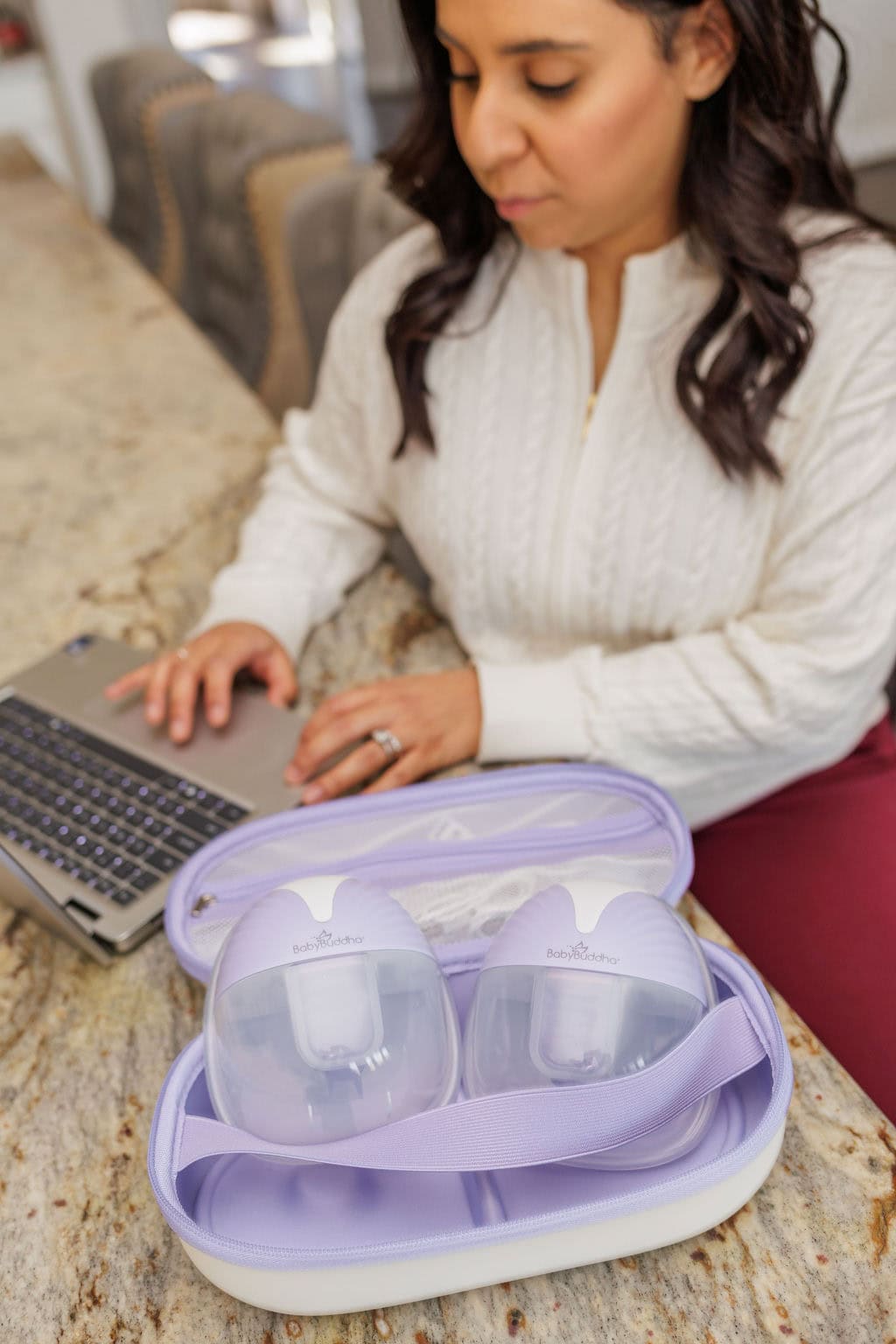
A wearable pump is a self-contained, battery-operated device that fits entirely inside a standard nursing bra. Instead of a separate machine, the motor, battery, and milk collection container are housed in the unit.
I do appreciate a good wearable breast pump because wearables are all about flexibility and freedom, which every mom (including me!) can appreciate.
They’re ideal for:
- Pumping at work
- Pumping on the go
- Multitasking
- Travel
- Busy toddler life or days with older kids
However, they typically do not match the suction strength or efficiency of a hospital-strength or high-powered primary pump. And if milk isn’t removed well, your milk supply will most likely dip over time. That’s why my general recommendation is to secure your primary pump through insurance first, and then add a wearable pump as a supportive tool on your registry. Relying on them alone, especially in the early weeks, can impact your supply long term.
The strategy I tell moms?
- Secure your primary pump through your insurance.
- Learn and use it consistently in the early weeks.
- Use a wearable pump for convenience once your milk supply is established.
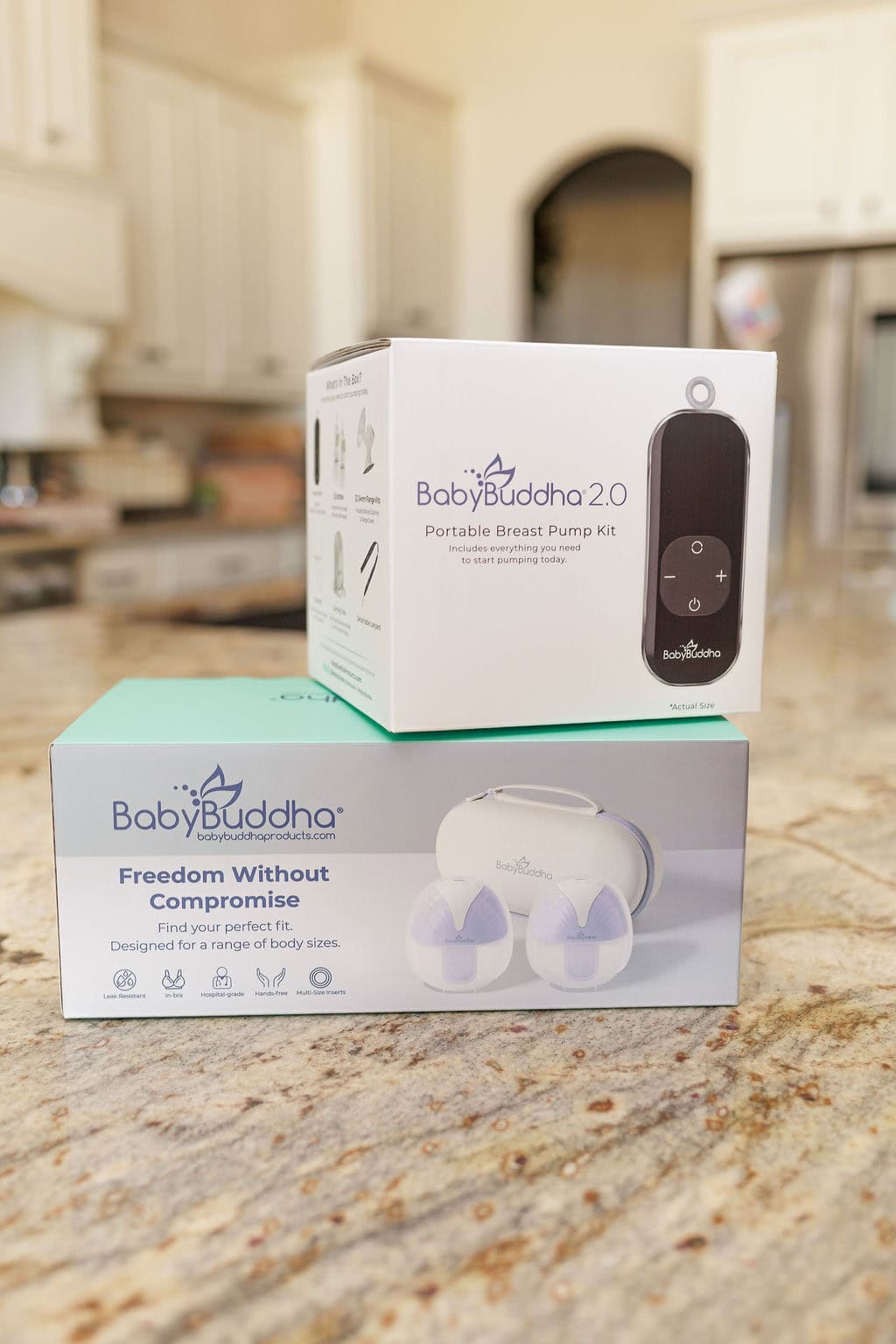
While many moms are now getting two breast pumps to meet their needs, if you can only get one, I highly recommend getting a primary pump. If you’re still unsure whether that’s what you need, understanding the different types of breast pumps and how they work can help you choose the right one for you. So, let’s look at the different types. BabyBuddha offers multiple options, so we’re going to look at them together.
BabyBuddha 2.0 Primary Portable Breast Pump Review and Performance
I’ll start here because this is the primary pump.
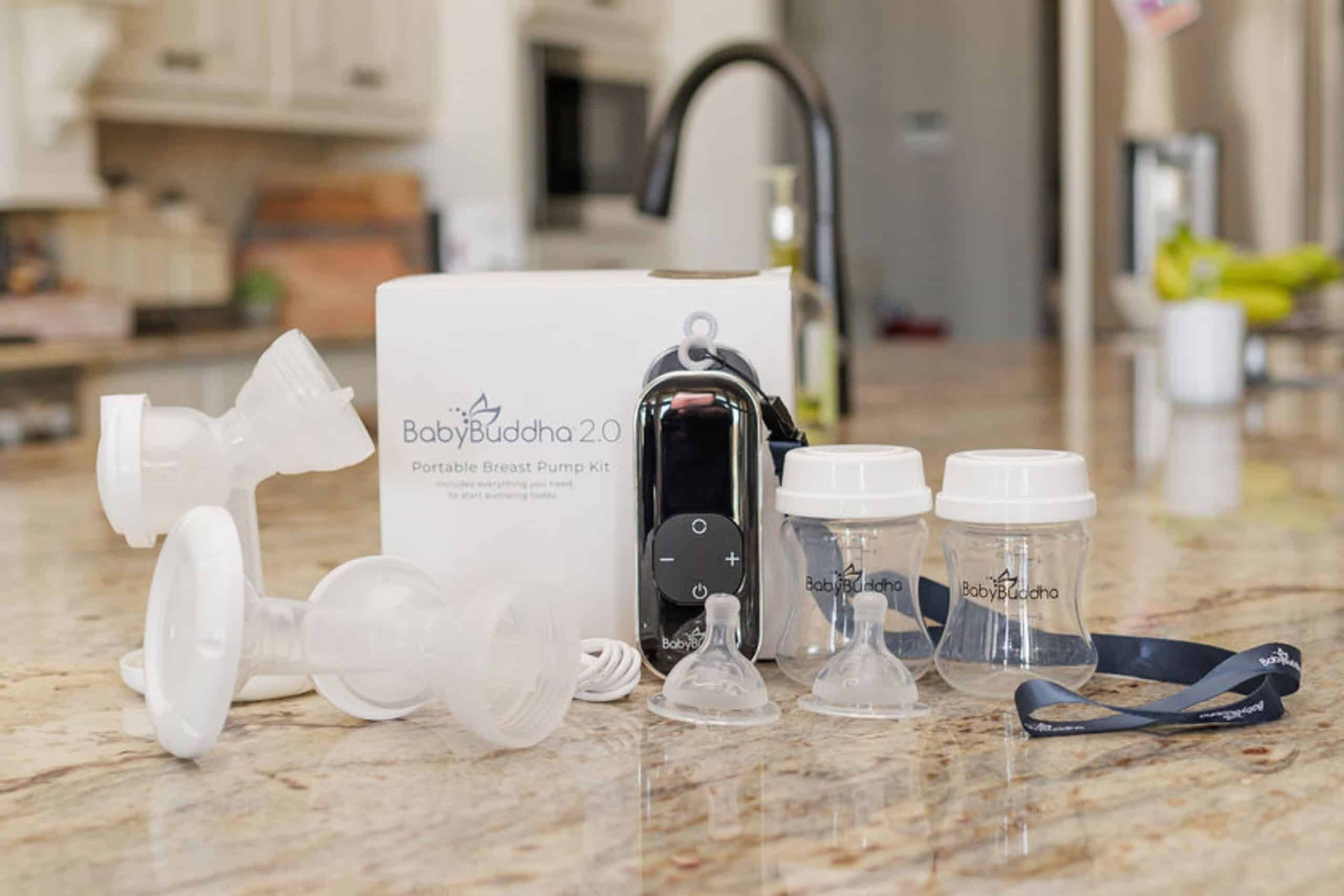
When I first opened the BabyBuddha 2.0, I was surprised by how compact it is. It’s significantly smaller than many traditional primary pumps, which immediately makes it appealing for moms who travel or pump outside the home. Naturally, you might wonder how strong the motor will really be. But when put to the test, the BabyBuddha 2.0 pump surprised me in the best way.
What Comes in the Box
When we received the BabyBuddha 2.0, here’s exactly what was included:
- BabyBuddha Rechargeable Primary Portable Breast Pump Unit (Black)
- Two (2) 24mm Flanges
- Two (2) Sets of Duckbill Valves
- One (1) Pair of Silicone Diaphragms
- Two (2) Bottles
- Two (2) Bottle Bases
- Two (2) Bottle Storage Caps
- Two (2) Bottle Hygiene Covers
- Two (2) Pump Covers
- Three detachable tubes with T-connector (easy cleaning)
- USB-C Charging Cable (fully charges in about 4 hours)
- Lanyard
- Carrying Tote
I always appreciate when a pump includes backup valves and diaphragms right away. Those are parts that wear down over time, and having extras from the start is practical.
Performance: Let’s Talk Suction
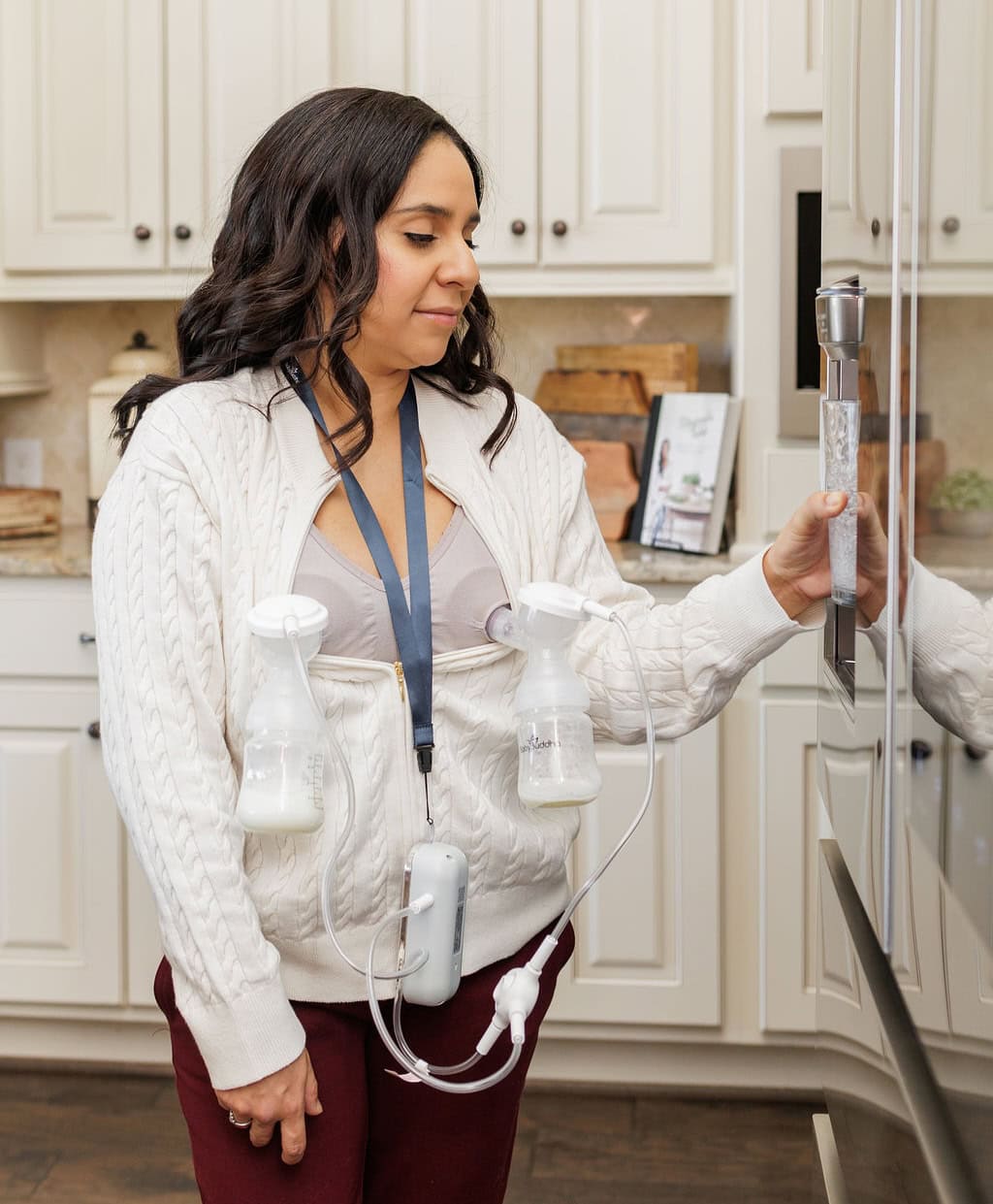
Even though the BabyBuddha 2.0 pump is small and portable, don’t let the size fool you. This pump is strong. Very strong! The suction is powerful, and I love that it includes two stimulation modes, including a longer pull pattern that really helps trigger letdown. The intensity levels are customizable, so moms can adjust to their comfort level.
When we were testing it with our team, what stood out most was how efficiently it emptied the lactating mama. She’s an exclusive pumping mom, so she knew immediately how well it worked. It removed as much milk as her larger primary pump, and it did it quickly! This breast pump doesn’t feel like a “portable compromise” at all. It performs like a full-sized primary pump, just without the bulk.
Settings & Strength
One thing that really sets the BabyBuddha 2.0 apart is the range of customization.
It offers:
- 6 Soft Stimulation levels
- 6 Classic Stimulation levels (including the signature long pull)
- 9 Expression levels
- Hospital-grade strength ranging from 53–315 mmHg
- That’s 21 comfort settings total!
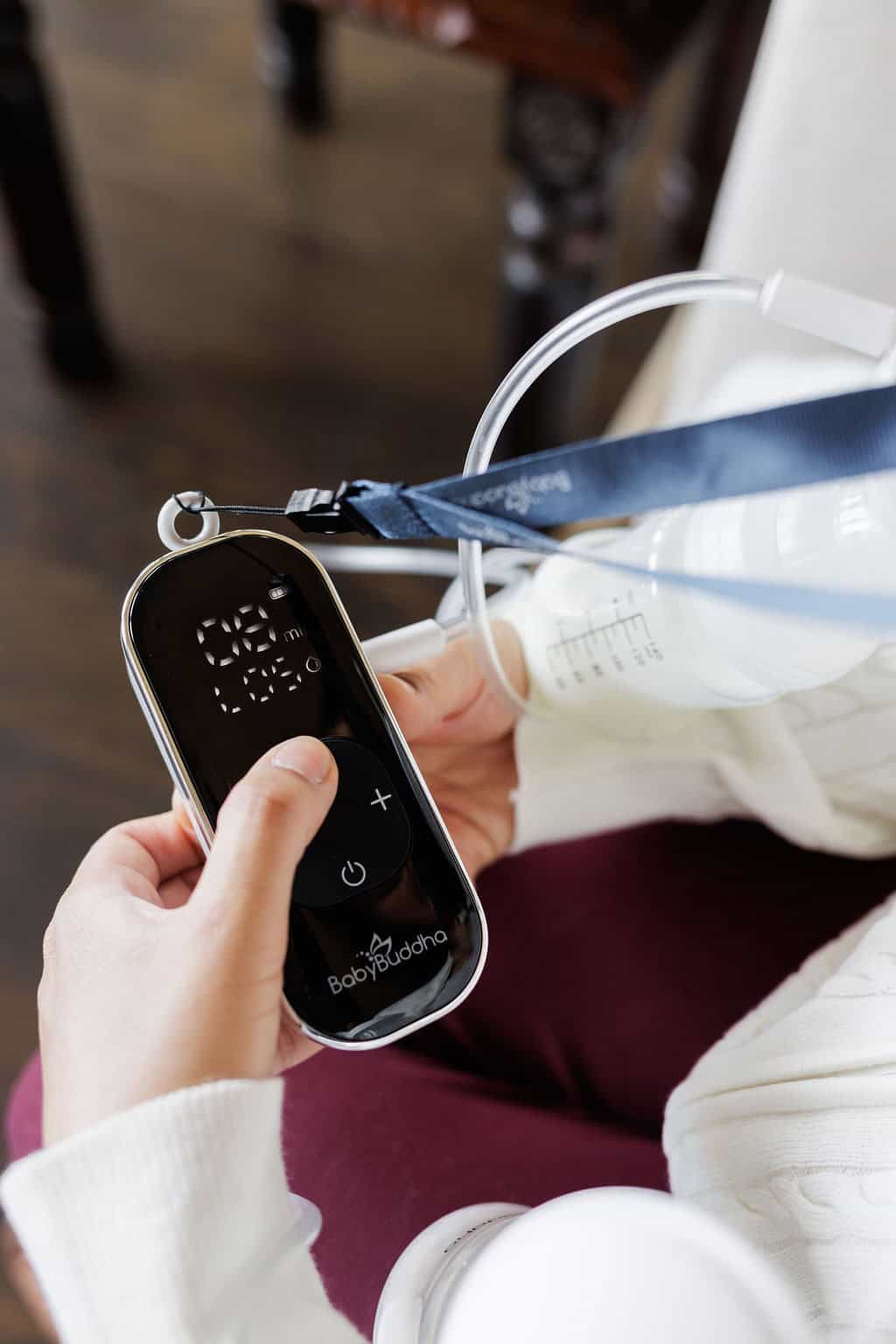
This kind of range matters because every mom’s body responds differently. Some need a gentler start, while others respond better to stronger suction. Having that flexibility allows you to adjust as your body changes throughout your pumping journey.
I also love that switching between double and single pumping is easy with the built-in valve system. And the closed system design protects milk from backflow contamination, which is always something I look for when recommending pumps.
What We Love
- Small, lightweight, and portable (great for travel)
- Very strong, customizable suction
- Two stimulation modes (the long pull mode is especially effective)
- Quick, efficient emptying
- Tubing that can adapt to other flanges (we even tested it with other flanges and bottles, and it worked!)
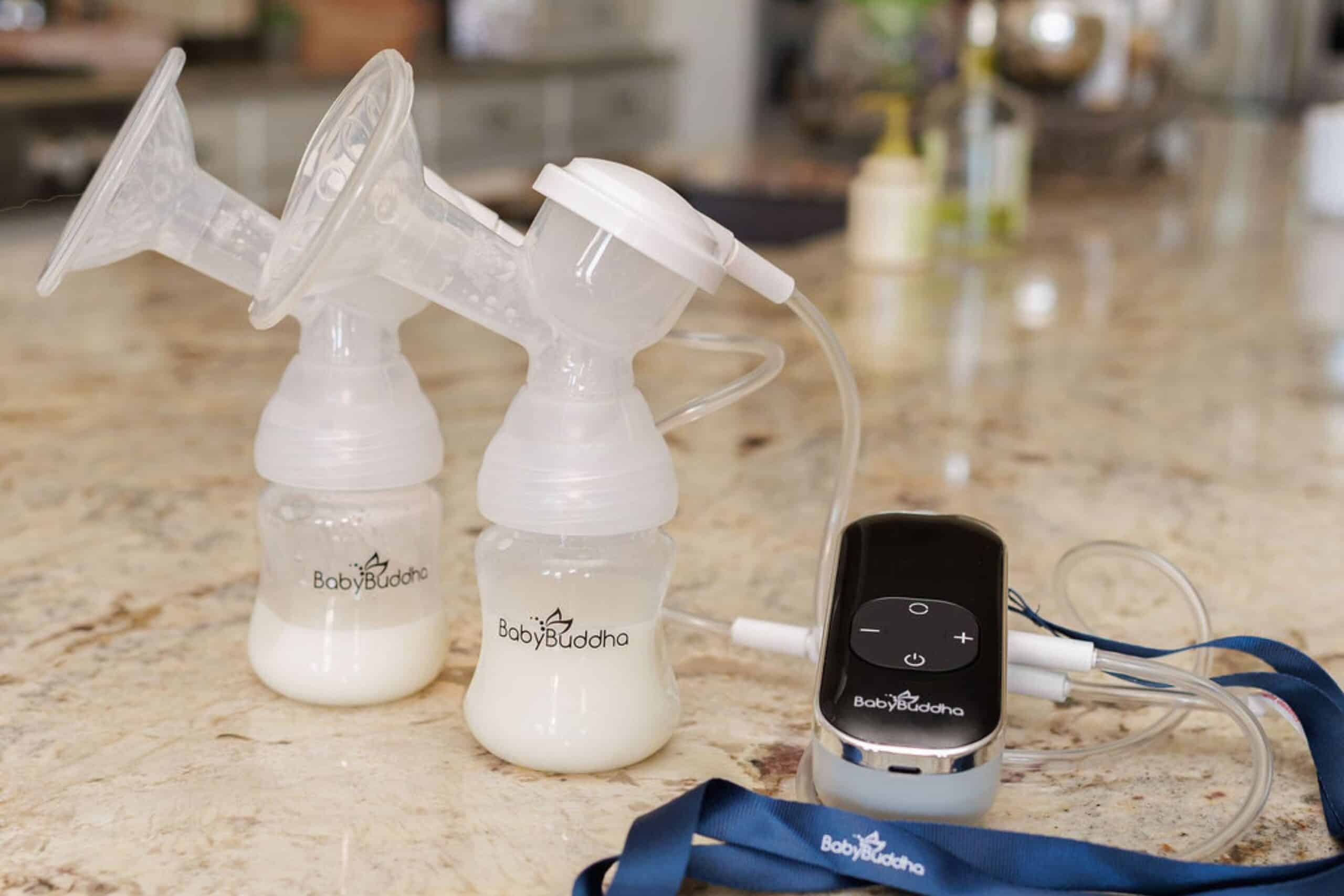
After testing so many breast pumps over the years, there were no cons for me with this breast pump. Our tester said it has become her favorite and that she will use this breast pump as her primary pump while traveling on spring break and likely just as often at home, too. That’s saying a lot! So, for moms who want hospital-level power in a portable body, this breast pump is the one you are looking for.
BabyBuddha EZ Fit Kit: Why Flange Fit Matters (Important Update!)
BabyBuddha also recently announced that its 2.0 pump now includes the EZ Fit Kit (website exclusive until April 2026).
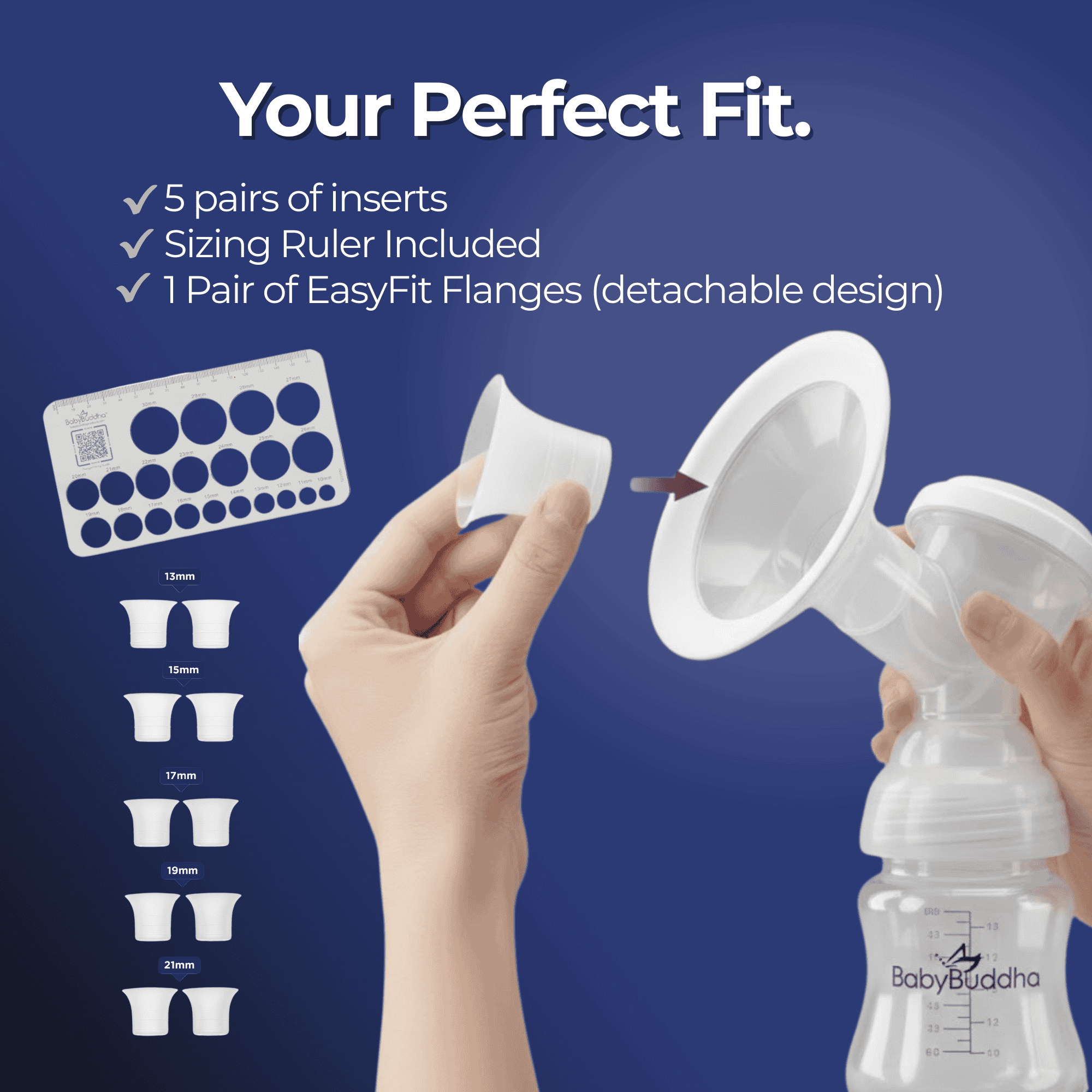
This includes:
- 13mm, 15mm, 17mm, 19mm, 21mm inserts
- 24mm flanges
- A measuring ruler
- A flange fit guide
Flange fit is one of the most overlooked but critical parts of pumping success. If your flange is too large or too small, milk removal suffers, and so does comfort. I’ve seen that derail moms’ pumping journeys early on. This is a fantastic addition that we are excited about!
I love that moms can now find their size right out of the box without scrambling to order inserts separately later. That’s a huge win, especially in those early postpartum days while you’re also trying to recover and learn how to feed your baby.
BabyBuddha Wearable Pump Review
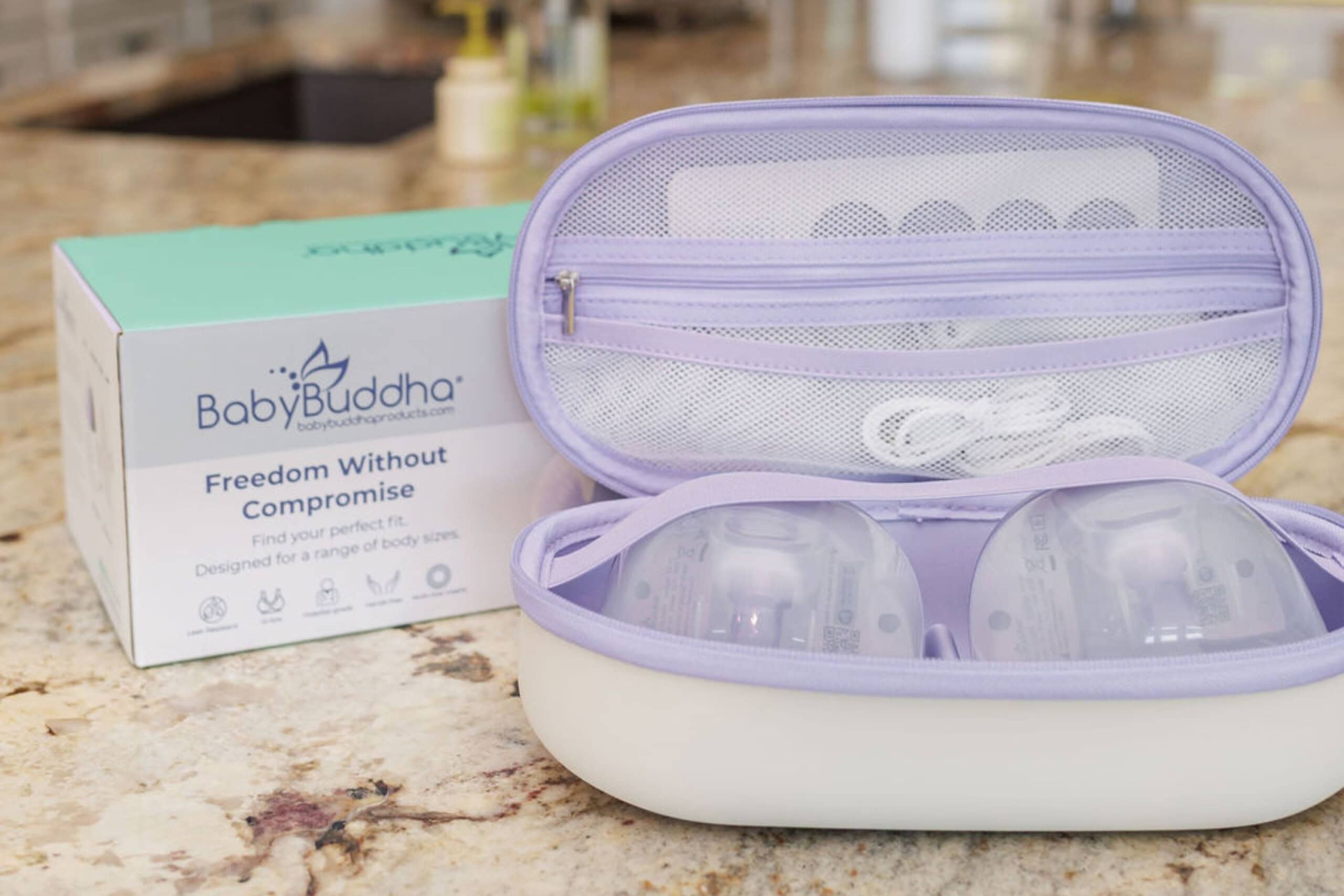
Now let’s shift to convenience. Wearables are designed for real life, and after testing BabyBuddha’s wearable pump, we found it to be a great option as a secondary pump for moms. We’ve tested a lot of wearable pumps over the years, and this one quickly became a favorite of ours thanks to its strength and ease of use. We can see why it has become so popular, especially because they are designed for flexibility and convenience.
What Comes in the Box
The wearable includes:
- 2 assembled wearable pumps (24mm silicone flanges installed)
- Inserts in sizes 13mm, 15mm, 17mm, 19mm, and 21mm (two of each)
- Extra duckbill valves and diaphragms
- Rapid magnetic charging cables
- Bra adjusters
- Flange sizing guide
- Carrying pouch
- Having multiple insert sizes included is a big plus here.
Settings & Performance
When testing BabyBuddha’s wearable breast pump, we found that it offers:
- 30 comfort settings
- 4 modes:
- Soft Stimulation
- Classic Stimulation (including long pull)
- Classic Expression (9 levels)
- Double Drop Expression (9 levels)
That’s more customization than many wearables on the market!
What We Love
The BabyBuddha wearable breast pump really impressed us. Here is what stood out:
- Has a great travel case, which is excellent for work or trips
- Easy setup
- Truly hands-free with motorized cups
- Gentle and stronger intensity modes
- Two expression modes (we prefer the two-drop mode)
- Built-in light (great for early morning or night pumping sessions)
- Easy milk pour into bottles
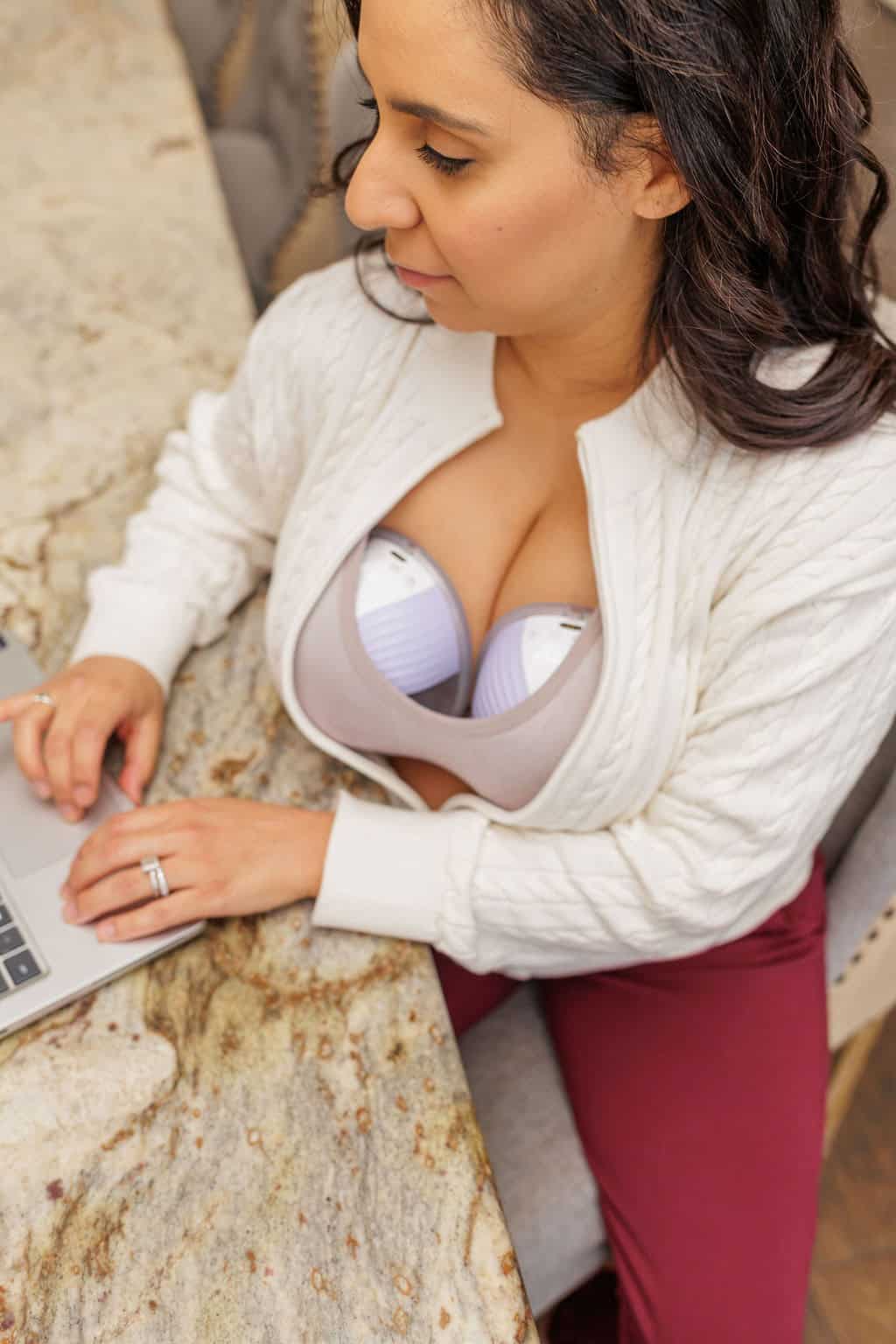
The two-drop mode mimics a dynamic suction rhythm, similar to how a baby alternates between quick pulls and deeper draws during active feeding. Our tester felt that this pattern helped trigger her letdown faster and maintain flow more consistently throughout her pumping sessions. It’s truly a mom-favorite!
Having a wearable pump eliminates the need for external tubing and handheld devices, making it easier to pump discreetly during meetings or while moving around, which is a big win for busy moms. Also, the built-in light is something you don’t think about until you’re pumping at night and don’t want to turn on overhead lights or your bright phone flashlight to see your output.
A Few Things to Know
While this pump is super efficient and great for busy days when you’re on the go, we did notice it took longer to achieve the same level of fullness and emptying as the 2.0 primary pump. That’s not unusual at all with wearables, since the motor is housed within the cup and positioned differently than a traditional primary pump setup. Compared to many wearables we’ve tested, however, this one performs exceptionally well and is stronger than many wearable breast pumps on the market. It is slightly heavier than some other wearable pumps, but we think it has to do with the quality of motor, which we prefer over other wearables since we want a stronger pump and more milk collection.
The BabyBuddha wearable pump is a great support pump to have if you are looking for a quality wearable, and it is excellent for maintaining pumping sessions once supply is established. Just remember that you shouldn’t rely on wearables alone to establish supply in the early weeks if protecting or increasing your supply is your goal. That’s why many IBCLCs (International Board Certified Lactation Consultants) recommend limiting wearable use to about 2–3 sessions per day in the early months. They often advise using a strong primary pump during morning and evening sessions to fully protect and maintain your supply. I echo that advice in my own practice.
Again, wearables are wonderful tools for flexibility, but your strongest, most efficient pump should anchor your routine.
BabyBuddha Hands-Free Breast Pump Collection Cups Review
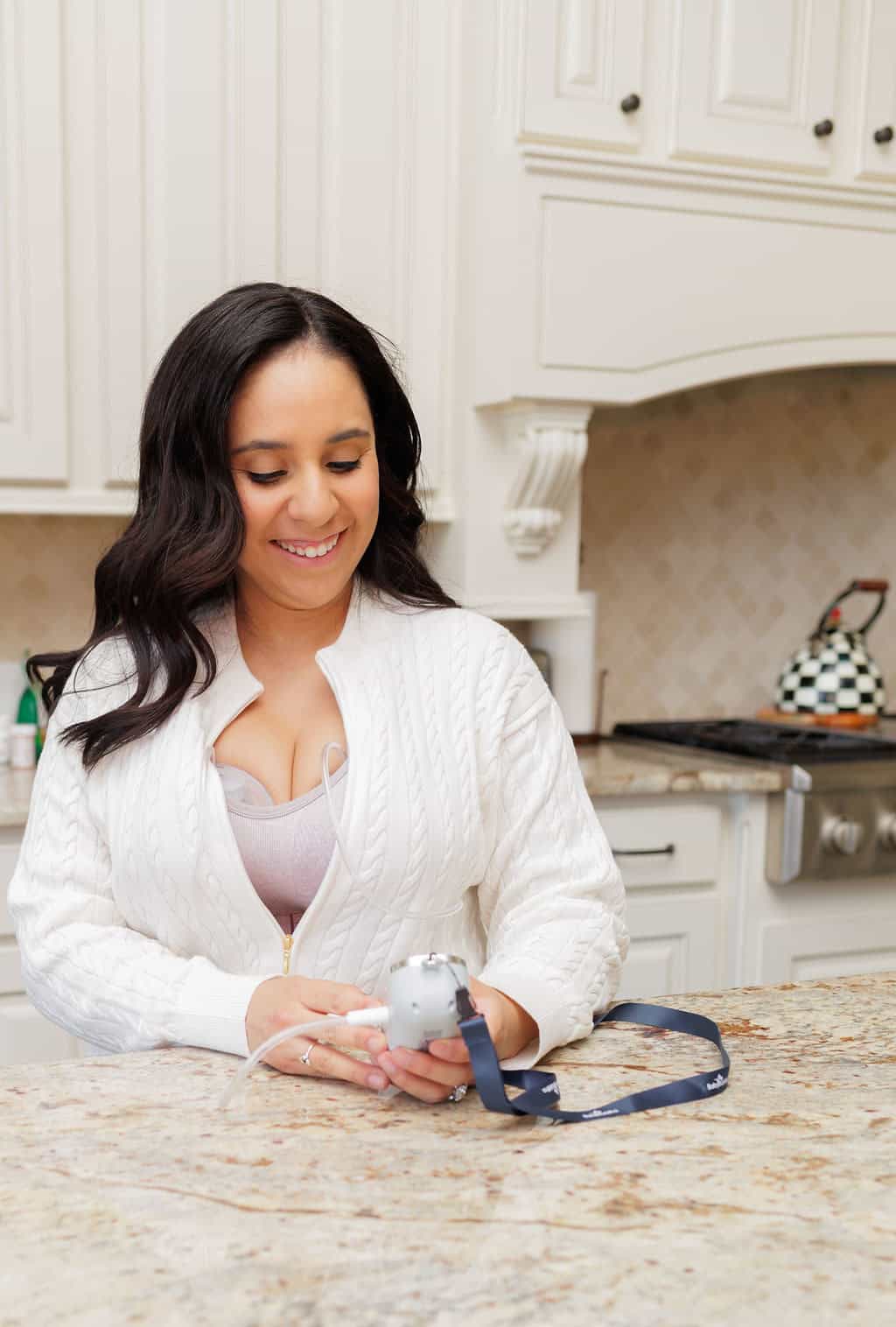
Now let’s talk about the option that genuinely surprised me.
The BabyBuddha collection cups are not a standalone pump. They connect to the BabyBuddha 2.0 motor, but instead of using traditional flanges with bottles hanging down, the milk collects inside discreet cups that sit right in your bra. So you get the hospital-grade strength of a primary pump, but with the discretion of something that feels much closer to a wearable. And for a lot of moms, that combination is the perfect option.
When we first opened these, I wasn’t sure what to expect. I’ve seen so many “wearable-style” systems that promise strength but just don’t fully empty the breast, but these cups are different because they’re powered by the BabyBuddha 2.0 motor. That matters! Since they attach to the primary pump motor, you’re not sacrificing suction strength for convenience. You’re getting the same powerful, consistent removal, just in a more discreet setup.
Our exclusively pumping tester immediately noticed the difference. She has used other wearables before and said the milk removal with these felt significantly stronger and more complete. That’s a big deal, especially for moms who rely entirely on pumping to maintain their supply.
Another thing I appreciate is the capacity. Each cup holds up to 8 ounces of milk. If you’ve ever experienced overflow with smaller wearable cups (and many moms have), you know how stressful that can be. Losing milk because you didn’t realize the cup was full is not something any pumping mom wants to experience. The larger capacity gives you more breathing room, especially if you have a strong supply or are pumping during longer stretches like travel or workdays.
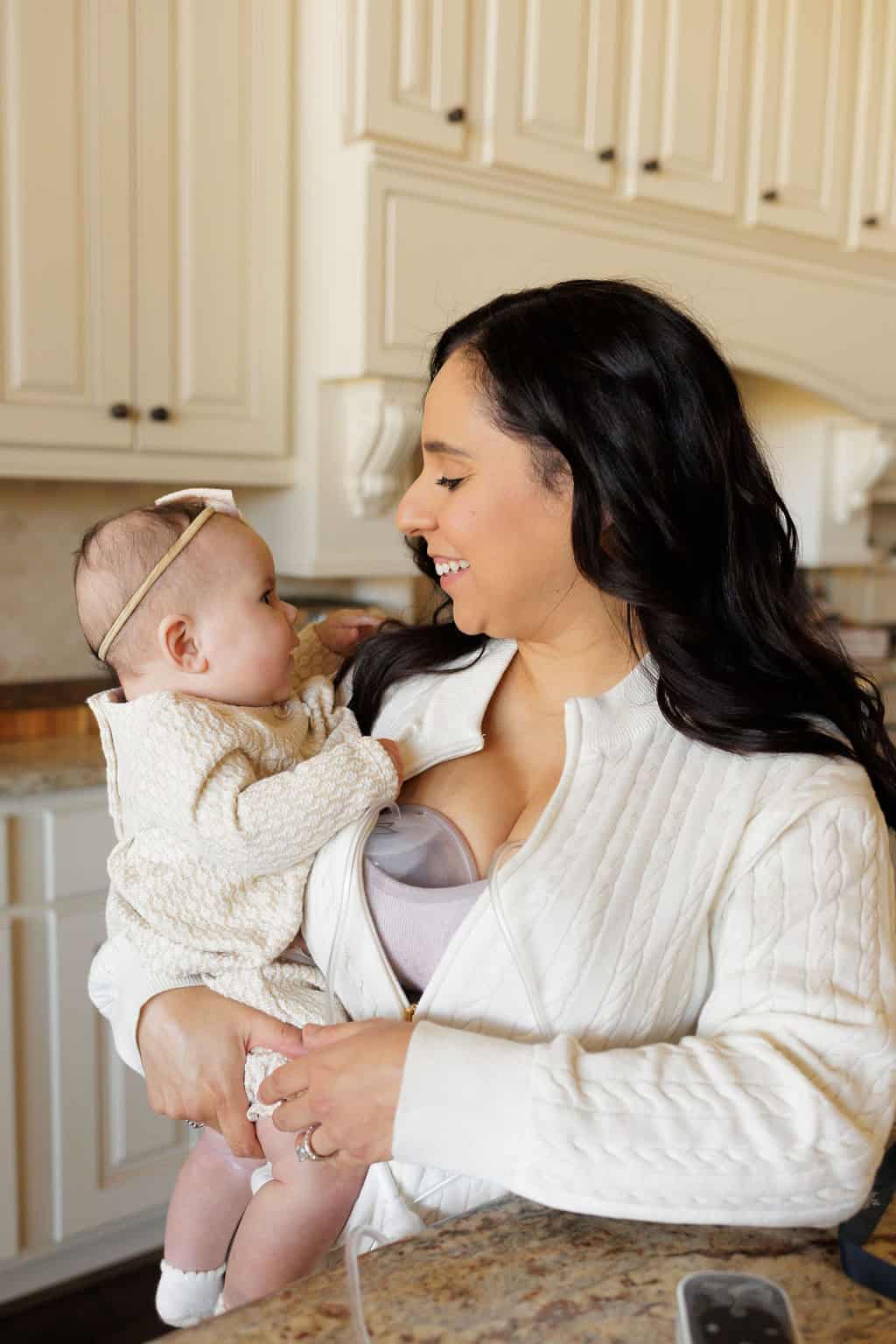
The collection cups themselves are lightweight (about 4 ounces each), which makes them noticeably more comfortable than fully motorized wearables that place the motor directly in your bra. Again, you still get discretion, but without that heavy, bulky feeling pressing against your chest during a session.
What We Love
- Strong milk removal
- 8 oz capacity (which has less overflow risk — we’ve experienced this before)
- Lightweight
- Great for meetings or pumping in the car
Our exclusively pumping tester said she is definitely planning to use these for airplane travel. I totally see why!
Things to Watch
Here are a few things to look out for when using the collection cups:
- Milk can pool in the flange if the duckbill isn’t placed properly, so pay attention to this when attaching.
- Pouring does take a little more attention because we did experience minor leakage around the seal once. Every drop counts, and we don’t want you to miss a single one.
Overall, if you want strong removal with more discretion than traditional flanges, these are a fantastic hybrid option I recommend. If I had to describe them simply, I’d say this: they’re the bridge between a primary pump and a wearable. You keep the power, but gain flexibility. And for many moms, that balance makes all the difference.
The Bottom Line: Build Your Foundation First

Here’s what I want moms to walk away understanding:
- Early milk supply depends on effective removal.
- Effective removal depends on suction strength, motor quality, and flange fit.
- Wearables are incredible tools. I use them, I recommend them, and they make real life possible. But they are support tools.
Your primary pump protects your supply, and your wearable protects your schedule. Both matter, but the order matters too.
If you’re pregnant and deciding:
- Use insurance to secure a strong primary pump.
- Learn your pump before baby arrives.
- Use a wearable strategically once your milk supply is established.
Ultimately, BabyBuddha’s 2.0 pump is a fantastic primary pump that my team and I highly recommend. It truly functions as a hospital-level strength, efficient primary option in a compact body. Their wearable pump adds flexibility without sacrificing too much power, and their collection cups bridge strength and discretion.
So, if you’re trying to decide between primary and wearable, don’t think of it as choosing one over the other. Think of it as building a system. Because breast pumps are tools, and not all tools serve the same function. The right setup depends on your goals, and your foundation should always prioritize effective milk removal first. That’s why if you build your foundation first and then layer convenience second, you set yourself up for a smoother, more successful pumping journey.
And that’s always my goal: helping moms make informed decisions that protect both their milk supply and their real life. I’m grateful that BabyBuddha’s lineup makes that kind of intentional setup possible for moms.

Disclaimer: This content was automatically imported from a third-party source via RSS feed. The original source is: https://www.baby-chick.com/primary-vs-wearable-breast-pumps-and-babybuddha-reivew/. xn--babytilbehr-pgb.com does not claim ownership of this content. All rights remain with the original publisher.