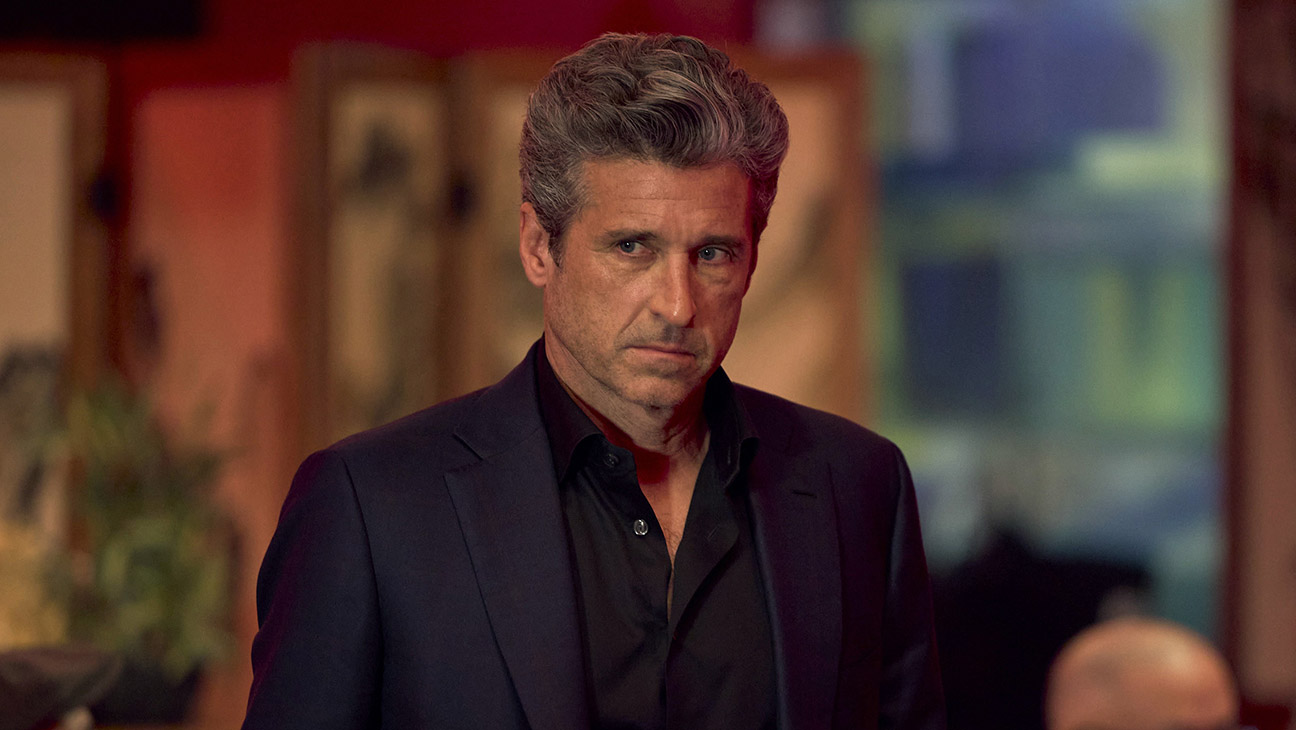
Patrick Dempsey in Memory of a Killer.
Christos Kalohoridis/FOX
[This interview contains spoilers from the March 16 episode of Memory of a Killer.]
Patrick Dempsey has never played a character quite like with his starring role on Fox’s Memory of a Killer. More than a decade after leaving Grey’s Anatomy, the ABC medical drama where he played legendary neurosurgeon Dr. Derek “McDreamy” Shepherd for 11 seasons, Dempsey has stepped into the role of a cold-blooded contract killer who struggles to keep his double life a secret after experiencing symptoms of early onset Alzheimer’s — the same disease, ironically, that Derek spent years researching on Grey’s.
“What was really appealing was the assassin side, and certainly the Alzheimer’s and the dementia side,” Dempsey tells The Hollywood Reporter of his long-awaited return to network TV. “I don’t get this type of character offered to me very often, and it came to me very quickly. I had to read it and then had to make a decision within 24 hours, because they were about to make the announcement [about the series order at the Fox Upfronts last May]. I was surprised and intrigued and excited about the opportunity to go and do this.”
Inspired by the book and 2003 Belgian film De zaak Alzheimer, the Fox psychological thriller series trades on Dempsey’s decades of goodwill as a beloved romantic lead to turn a ruthless killer into an antihero worth rooting for.
As he grapples with the fact that he is losing his mental faculties like his brother Michael (Richard Clarkin), who is now housed in a memory care facility, Dempsey’s Angelo is left to wrestle with the morality of his past choices, especially once his own pregnant daughter, Maria (Odeya Rush), becomes the target of someone from his other life. “You’re going to find out more and more about [his morality], and that question gets answered through the rest of the season,” Dempsey teases of the final three episodes. (The finale airs April 9.)
In the wide-ranging interview below, star and executive producer Dempsey opens up about his interest in exploring the emotional cost of an Alzheimer’s diagnosis not only on the patient but their caregiver, how long a show about a man struggling with this disease could conceivably last — and why he has made peace with being forever known as “McDreamy” in the public consciousness. He also pays tribute to his former Grey’s Anatomy co-star Eric Dane, who died Feb. 19 after a battle with ALS.
***
Derek Shepherd was a neurosurgeon who famously dedicated the last years of his life to studying Alzheimer’s on Grey’s, and your character, Angelo, in Memory of a Killer is a hit man grappling with early onset Alzheimer’s. Is there a reason you are interested in playing characters who are battling this kind of medical affliction in some way?
I do a great deal of work within the cancer community, certainly from wraparound care and supportive care through prevention and survivorship in caregivers, and that really appealed to me. I thought there was a real opportunity with this show to bring more light and awareness to Alzheimer’s and how it affects the individual and the family. Part of what’s interesting is, “How can you make it exciting and entertaining and also informative at the same time?” And the people that I’ve run into [who want to talk about the show], all have a story about how it’s affected them. Certainly, with the crew, a lot of people have been affected by this terrible disease with someone in their family. This is a great way to explore that.
We’re also having fun entertaining people at the same time, because we have a family soap opera drama on one side. There is this procedural aspect with the Alzheimer’s and issue with the caregiver dynamic; and then we have the action side as well. So it’s like almost three genres in one. It’s been really challenging this year to set all of that up. I’m really pleased we survived the first year, that people are starting to discover it and are enjoying it, and that Fox, for a network show, has given us the room to be able to experiment visually and tonally, which has been a struggle. It’s very difficult, but it’s fun. It’s nice to have a job, and it’s nice to have a character that is challenging and different than what I’m normally known for.
Patrick Dempsey in Memory of a Killer.
Christos Kalohoridis/FOX
The tagline for this series is that Angelo is losing his mind but slowly gaining a conscience. Over the course of this season, he grows increasingly paranoid and begins to question who ordered the hits that he was ordered to carry out by his boss Dutch (Michael Imperioli). What has intrigued you about how Angelo is wrestling with the morality of being a hit man as he’s batting this devastating disease?
The first season is a three-month timeline. People are like, “How do you prolong this [show], in success?” That disease can deteriorate quite rapidly, so we’re very clear on that. I think he starts to question life, because he’s starting to see through his brother that he’s losing someone close to him and the pressure of being a caregiver — both on the work side of his life, and then [on the personal side] — is he going to be there for his daughter and his grandchild?
So all of that, to me, adds much more tension and humanity to a guy who’s basically a killer, who’s not a good person. Yet, somehow, you end up rooting for him, because of his vulnerability to his disease. What steps can he take in being his own caretaker? And then the challenge of stepping in and asking for help and getting it. Will he be able to arrest it enough to continue on to see the birth of his grandchild or even survive the different assassinations that he has to do? And then at the same time, his private life is now under attack. He’s been very good at compartmentalizing these two separate worlds, but it’s all coming together now. How much of [that blurring divide] is his mental state? Is it an illusion, or is it a real thing that’s really happening? And who do you trust?
There are little moments sprinkled throughout the season to show that Angelo is gradually losing his mind — he briefly forgets his home security code, he accidentally puts a gun in his fridge rather than the safe, he loses his sense of direction in a forest, and now he’s begun to hallucinate his brother. Can you give voice to Angelo’s internal dialogue in those kinds of scenes?
Well, that’s what’s appealing to me and what we keep talking about. It’s very challenging in network television, because everybody wants it explained. But I think what is most appealing and most compelling are the private moments when he’s not talking and there is so much going on internally. That was what we fought for — he is really battling with what is going on with him, and he has no one to turn to. As an audience, you’re compelled to watch and listen. You see so many different shows on network television, especially procedural, where you’re relying on the exposition. What I like and what we set out to do — and I think we’re winning some battles and losing some battles — is less exposition and really forcing the audience to pay attention to see and hear the clues so that if you miss something, it makes you want to go back and go, “What did I miss? Where is that Easter egg in there, that hidden piece of information?”
The fifth episode offers the first real glimpse at Angelo’s backstory five years prior to the present-day timeline. Angelo agrees to stay in New York and work with Dutch as long as he agrees to keep Michael safe, even if it is at the expense of his marriage to his now-late wife.
Yes! Our biggest struggle was setting up those first four episodes and how to enter this world. There was a great deal of discussion: Do we show him as an assassin first, or do we show him in his suburban life? That was the big debate. And it was interesting to be able to flip it and to show him leading these two different lives. And then episode five, I think the whole show really comes together, because you start to understand so much more about who he is and where he came from and what’s motivating him.

Michael Imperioli with Dempsey in Memory of a Killer.
Jan Thijs/FOX
By the end of this week’s episode, Angelo vows to do whatever it takes to return to some semblance of his old self before he began experiencing the symptoms of this incurable disease. As an executive producer, have you spoken with the rest of the creative team about the long-term plan for this show? How long, realistically, do you think this show could last with the unrelenting bleakness of Angelo’s life?
There are a lot of breakthroughs happening with this disease right now. What can we do to explore that? So not only are we entertaining the audience, we’re also informing people who have this problem in their life right now with a family member diagnosed with Alzheimer’s. I would love to, if we get renewed, dive deeper into that: What are the alternatives? What can happen? And working with the people that are leading the field in this research, I think that would be his quest. What I would like to see is him trying to find the best approach to be able to stay alive. You can’t reverse it, but what is available to him to slow [the progression] down so that he can set up the right environment for his grandchild and for his daughter? And with his brother, the impact of [being] the caregiver is profound. We keep talking a lot about that. I don’t think people talk enough about how devastating it is on the family and the caregivers.
You mentioned earlier that Angelo is not a kind of character you have been offered very much in your career, but you’ve been able to use your decades as a romantic lead to get audiences to empathize with a man who kills people for a living. In the last decade, how have you gone about trying to get audiences to see you as more than just “McDreamy” while also continuing to acknowledge the importance of your past work?
It depends on your generation. I’ve been in the business now for 40 years, which is crazy. I can’t believe how quickly it’s gone by. You have these waves in your career and it goes up and down, and this is a new opportunity. I really love the action and the physicality. I like a character where it’s about behavior. I love the action and the driving sequences. I would love to be able to do more of that. It forces me at my age to be really smart about my health and to be active and working out and training. That’s a good thing for you going into your 60s anyway. Now is the time to really understand how important diet is, how important it is to keep yourself mentally alert and to exercise and eat properly — all of these things are really important. That’s the appeal. It gives me that extra motivation to stay working hard and being disciplined, and I really enjoy that side of it. Hopefully, we can explore more of those sequences in a second season.
Dempsey in Memory of a Killer.
Christos Kalohoridis/FOX
Since you’re an accomplished racecar driver in your own right, do you do all of your own driving on the show?
Yeah, I do. I love the stunts. I try to do as much as possible. In the offseason, I’m really working with my flexibility, strength training. So if we do get a green light to go forward, it would be good. Or if I have an opportunity to play more roles like this, thatwould be exciting. I love the physicality. I’ve come from a show [Grey’s] which was so procedural where it was all based on the exposition or the terminology. To me, the most exciting stuff is the behavior of what’s not being said and what is being said in the silence. That’s what I find to be the most intriguing.
You have officially been away from Grey’s longer than you were actually on the show. You returned to the show for a few guest appearances in Meredith’s dream beach sequences during the show’s COVID-19 season, but you have, by and large, moved on from “McDreamy.” What kind of relationship do you have with Derek Shepherd now? Do you still have any attachment to the character?
No, but what it does give me is a platform to help talk about the Dempsey Center and the work that is being done there. We’re talking in March right now, which is Colorectal Cancer Awareness Month. People still perceive me in many ways [as a doctor on TV], and so many people have gone into the profession because of that show, continually. It’s an evergreen. It seems like it never goes away. I think that’s a really beautiful legacy — that more people are going into the profession to become doctors and nurses which we need, and then it brings awareness to the type of work that we’re doing at the center. We don’t treat the disease; we treat the person holistically.
[Grey’s and Derek] will always be a part of my life. I accepted that a long time ago. It’s nice to be able to go and do something else — and to be allowed to do something else — and hopefully the audience will accept me and come along on these new journeys as an actor to explore different types of characters. But it’s really been a blessing to give me this kind of visibility and platform. When I started, I came from a very small town in Maine, and I’m continuing to be an employed actor, which is a miracle in itself. I have seen so many people who I started with who have either given up on the business or unfortunately are no longer around. I’m grateful for everything that is happening, and in whatever form I can work and create and bring awareness to the causes that are meaningful to me is a blessing.
I’m actually in between the ages of your eldest daughter and your twin boys, so we all grew up in this era of streaming and binge-watching. I was in my early teens when I first binged Grey’s. Out of curiosity, have your kids ever watched the show? Do they ever give you any feedback about your work?
No, they really don’t watch anything that I do. (Laughs.) But I actually give them scripts to look at and to get their feedback and everything. The boys in particular were so young that it’s a different experience for them. They haven’t watched it. When they were very young, they watched Enchanted and things like that. But, no, I’ve kind of kept them away from it. My daughter’s watching the show. She likes the new show very much. My son is inconsistent because he’s doing other things. So, no, they’re not into that at all, which is fine. I don’t have a problem with that.
Patrick Dempsey with Eric Dane in Grey’s Anatomy.
(Photo by Danny Feld/Disney General Entertainment Content via Getty Images)
Your kids are keeping you humble.
They definitely keep you humble. There’s no question about it. Certainly, as you know, your generation has had to deal with a lot of difficult things, and you’re looking at a lot of difficult things presently going on in the news. The isolation of what happened with COVID, I think, really hurt the development of all of you socially so that you’ve become a streaming culture. It’s important to be social, to get out, to put the screen down and to live. It’s really important that my children get to travel and to be who they want to be, and get outside the business or whatever they want to do. But to put the screen down and go and experience life is key. [I’m always thinking about] are they good people, and can we keep those values? That’s the challenge.
I think in the heat of the success of [Grey’s], it really infringed upon our ability to go out to be social and to be private, and that’s kept us at home a lot more. I’m much more of a homebody. I’m aware of my responsibility when I go out. I want to be present, and if people come up to me, I want to make sure I engage and talk to them and greet them or take a picture. It’s sometimes very difficult with the family, because we could be having this intimate moment and sometimes people cross the line. And they don’t mean to be rude, but it’s very hard. That’s part of the position you’re in [as a public figure], and you have to accept that — and they have over time. They understand the role, and when they come out with me now, they have much greater appreciation of, like, “Oh, what is important when you go out?” They’re learning at this age. It’s better than when they were younger.
It’s always a relief to hear that there are some other young people out there who are well-adjusted enough for the insanity of the world that we live in right now.
Especially now. I think the hardest thing — and we’re not seeing it certainly with the current prop of political leadership — is true kindness. I’m hoping with this new, younger group of politicians that are upcoming that what we’ve been seeing is this last gasp of this sort of narcissism that is happening in politics. We need [politicians] to remember that [when] the people are electing you, you need to represent them — not yourself or your party. We need to get out and get people mobilized to vote. We need to work on our educational system. I see this within the center: Any kind of diagnosis — and this gets back to the show with Alzheimer’s, or a cancer diagnosis — can wipe you out financially, and you are gone. These are important things. We have to learn to take care of each other and understand each other. Even though we have maybe a different point of view, how can we have a dialogue that is civil? That’s the key to moving forward, and I hope we can do that.
I was so devastated to learn of Eric Dane’s passing a few weeks ago, and I am so deeply sorry for your loss. I understand that you kept in touch with him right up until the very end of his life and were trying to get him to play Angelo’s brother Michael in Memory of a Killer, but the progression of his ALS made it virtually impossible. How have you been processing the kind of impact that he had on your life? [Writer’s note: Read Dempsey’s tribute to Dane, from the morning after Dane’s passing, here.]
Well, not only him, but several other people I know have passed recently, too. You realize how quickly your life goes by, how fragile it is, and then, what do you do with it? At the end of the day, are you of service? Are you doing something that is positive? I think this is the lesson he’s taught me through his struggle and through several other people I have lost over the last few weeks, unfortunately. At this age, you start to realize what’s really important to you in those values. What legacy are you leaving behind? Is it a positive one? And he’s done that. He used his platform and visibility to bring attention to this horrible disease.
Thank you for sharing that. I wish you had had one last opportunity to work with him in Toronto. Having grown up in the city, I’ve personally enjoyed seeing little landmarks pop up in the background, even though your show is supposed to be set in upstate New York.
It’s been fun being in Toronto. Since you’re there, the crews are hardy because we finished [filming season one] in January, and they were working in some really cold, windy, snowy environments. They were real troopers, and there is a camaraderie and a fellowship in that, and they were inspiring. So I want to thank them and certainly everybody in Toronto who put up with us in the neighborhoods we were shooting in. They dealt with our long hours in a nice way. I really enjoyed the city, and I hope I get to go back and do another season there. I grew up in Maine, so everybody thinks they’re partly Canadian, too. I have a good respect and appreciation for the Canadians.
***
Memory of a Killer airs Mondays at 9/8c on Fox. Episodes stream the next day on Hulu.
Disclaimer: This content was automatically imported from a third-party source via RSS feed. The original source is: https://www.hollywoodreporter.com/tv/tv-features/patrick-dempsey-tv-return-memory-of-a-killer-greys-eric-dane-1236535433/. xn--babytilbehr-pgb.com does not claim ownership of this content. All rights remain with the original publisher.