Best animated short Oscar nominee The Retirement Plan.
Screen Ireland
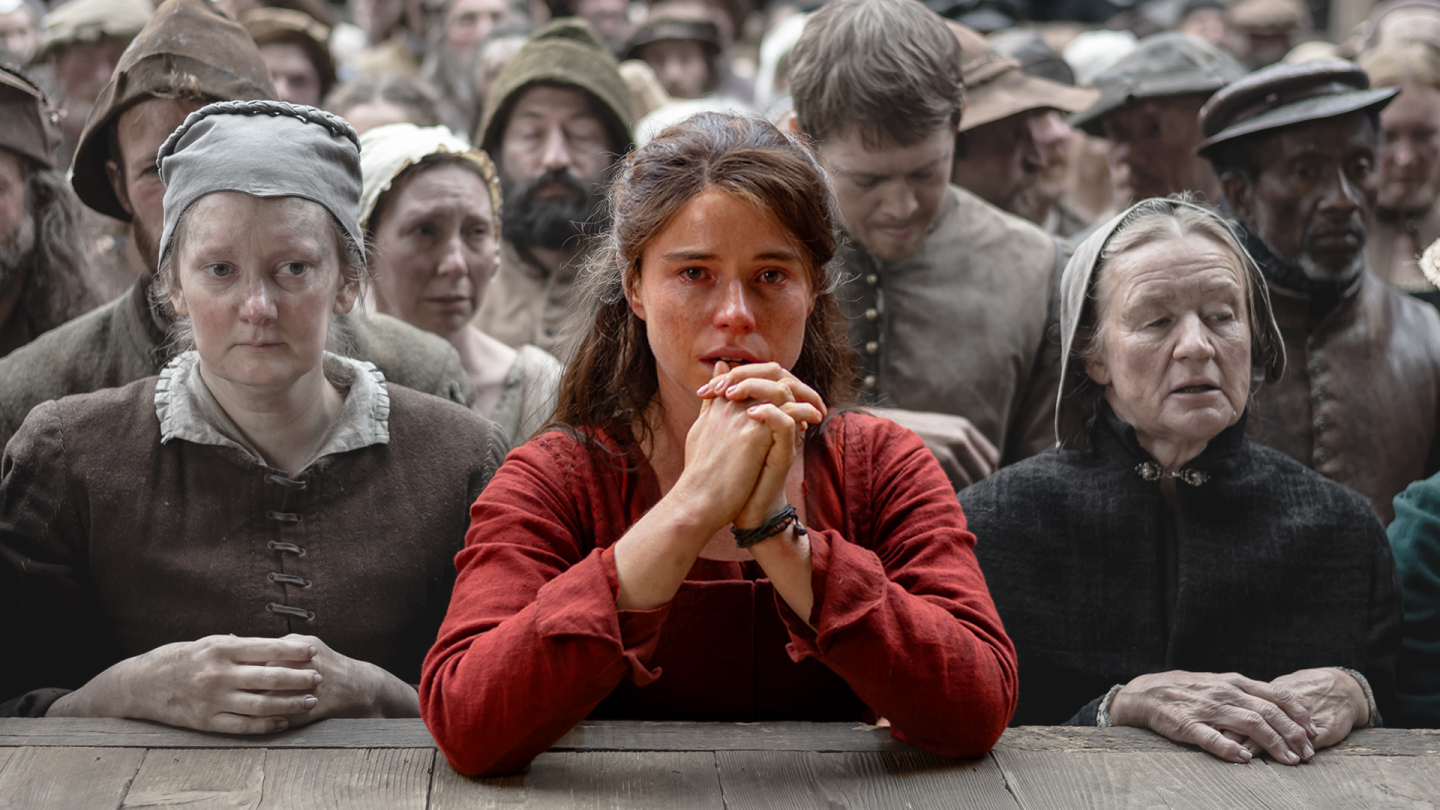
Producer Macdara Kelleher has been basking in the glow of his homeland’s successes this past week, as a diverse range of Irish filmmaking talent shares the spotlight around the Academy Awards.
The founder of Dublin-based Wild Atlantic Pictures served as executive producer on Richard Linklater’s critically acclaimed biographical drama Blue Moon, helping facilitate both the use of locations around the city and the facilities at Ardmore Studios in Wicklow, about an hour from the Irish capital.
Kelleher has been in town to support the film‘s star Ethan Hawke, nominated for Best Actor for his portrayal of lyricist Lorenz Hart, and best original screenplay nominee Robert Kaplow. Joining him for the big night were Jessie Buckley, who would go on to win best actress for Hamnet; VFX artist Richard Baneham, who took home a statuette for Avatar: Fire and Ash; and the team behind The Retirement Plan a nominee in the best animated short film category.
Best animated short Oscar nominee The Retirement Plan.
Screen Ireland
In a call ahead of the ceremony, Kelleher pointed to the 2022 nomination of Colm Bairéad’s The Quiet Girl (An Cailín Ciúin) — the first Oscar-nominated film in the Irish language — as a watershed moment, and credited systematic state support for what’s followed.
“We’re on a run,” he says. “We’re probably one of the most fortunate countries in Europe in terms of the level of support we have. That support is really about taking you from that first film and — if you’re lucky — taking your filmmaking beyond that.”
He cites director Lee Cronin, with whom he’s currently developing a remake of The Mummy at Warner Bros., as a case in point. “Screen Ireland supported his first film,” he says, referring to 2019’s The Hole in the Ground. “And now here we are in Hollywood at Warner Bros. working on a blockbuster. They’re a vital lifeline.”
The awards season has put a very public face on what’s become known as the “green wave” of Irish cinema — but back home, the industry appears to be in rude health regardless. Screen Ireland reports that last year saw a record-breaking €544 million ($624 million) in production spend invested in the Irish economy, a 26 percent year-on-year rise. Between 2021 and 2024, the organization itself invested more than €120 million ($138 million) across film, TV drama, animation and documentary, supporting more than 116 feature films, 64 TV series and 120 short films.
“In Ireland, the arts and culture are so highly valued and we have a depth of creative talent across so many different art forms — certainly cinema, but also literature, music, theatre,” says Désirée Finnegan, chief executive at Fís Éireann/Screen Ireland. “That individual creative talent, that kind of craft and artistry, has been central to the success in recent years. The screen art budget has also significantly increased over the last five years thanks to sustained government investment, and that has definitely enabled us to increase our investment levels across the board in talent development.”
On the incentives side, Ireland’s Section 481 scheme offers a tax credit of up to 32 percent on eligible Irish expenditure. This year’s budget also introduced a new 40 percent relief rate for productions with a minimum of €1 million ($1.1 million) in eligible VFX spend — a nod to one of the industry’s fastest-growing sectors. Recent beneficiaries have included Marvel (WandaVision, Spider-Man: No Way Home), Netflix (The Irishman) and HBO (Game of Thrones). Local production companies have also partnered with Disney (Disenchanted), Netflix (Wednesday), Universal (Abigail) and Sony (The Pope’s Exorcist). To help facilitate co-productions, Screen Ireland opened its first U.S. office, in Los Angeles, in 2019.
“We’ve always maintained that our true resource is the creative talent we have here in Ireland,” says Finnegan, “and that’s definitely often cited by the studios that come here and the key decision-makers in explaining why they come to shoot in Ireland or co-produce with Ireland.”
That talent pipeline has been deliberately built. Screen Ireland’s various training and development initiatives placed more than 18,000 people in jobs between 2021 and 2025.
“These schemes that Screen Ireland have set up to develop the talent have an enormous impact — it’s not happening by accident that the Irish film industry is getting this level of success,” says Julianne Forde of Dublin-based Tailored Films, whose credits include the Ali Abbasi-directed The Apprentice, which received two Oscar nominations last year.
This week, Forde and her producing partner Ruth Tracey traveled from Dublin to the U.S. for the world premiere of Damian McCarthy’s horror film Hokum, starring Adam Scott, which screens at SXSW on March 14. The film was shot entirely in Ireland.

Adam Scott in Hokum.
Screen Ireland
“Something that a lot of Irish projects have in common is that we’re quite commercial leaning in terms of the approach,” says Forde. “And Screen Ireland is a fantastic funder because they’re aware of the commercial realities of trying to finance a film and they will finance films that have a lot of commercial money in them too. They’ve really put in the work, and I think the success of the nominations at the Oscars this year is an overnight success that’s been 20 years in the making.”
Disclaimer: This content was automatically imported from a third-party source via RSS feed. The original source is: https://www.hollywoodreporter.com/movies/movie-features/ireland-films-hollywood-oscars-1236530837/. xn--babytilbehr-pgb.com does not claim ownership of this content. All rights remain with the original publisher.