Dr. Rebecca Dekker – 00:00:00:
Hi, everyone. Thank you for joining me for today’s episode. Before we get started I wanted to share a quick behind the scenes update from Team EBB. We have had a very busy start to the year, and we’ve been in full planning mode for the 2026 Evidence Based Birth® conference, which will be held online on March 17 and 18. This year’s theme is “Building Bridges to Respectful Maternity Care” and it’s at the heart of every session, every conversation we’re bringing to the conference. All of our speakers and topics are in place and I’m excited to share that early bird tickets are now available and you can register for the conference starting today. I’m also thrilled to announce our keynote speaker Dr. Jessica Brumley. Dr. Brumley is the current president of the American College of Nurse Midwives and we’re honored to have her joining us to talk about what it truly looks like to build a culture of respect in maternity care. This year there are a few different options for you to attend virtually. You can join us for Day 1 of the conference, or Day 2, or both days by selecting a Day 1 ticket, a Day 2 ticket or the two day bundle all with contact hours included. So if you get your ticket to the EBB conference right now, you’ll get early bird pricing which is the lowest price offered. And when you register by February 18, you will also get access to a special post-conference bonus session called peri-menopause and the potential implications in postpartum. Just go to EBBirth.com/conference to check out the full conference schedule, session topics, and meet our amazing speakers. We also have applications open on that page for equity pricing through February 27. I look forward to seeing you and hanging out with you online at the EBB conference this March.
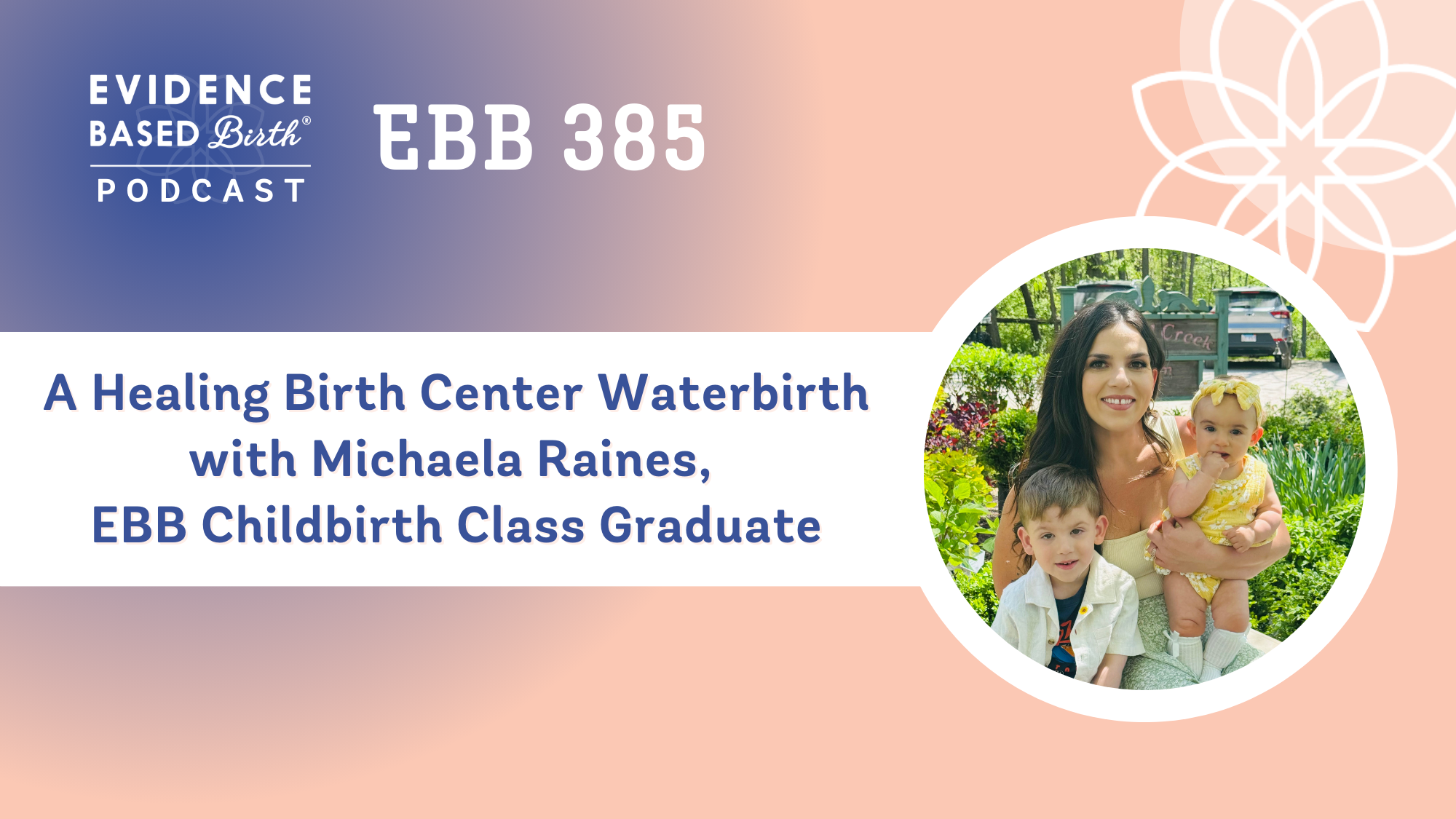
Now, let’s go to today’s healing birth story. On today’s podcast, we’re going to talk with EBB Childbirth Class graduate Michaela Raines about her Healing Birth Center birth story. Welcome to the Evidence Based Birth® Podcast. My name is Rebecca Dekker, and I’m a nurse with my PhD and the founder of Evidence Based Birth®. Join me each week as we work together to get evidence-based information into the hands of families and professionals around the world. As a reminder, this information is not medical advice. See ebbirth.com/disclaimer for more details. Today, I am so excited to welcome Michaela Raines to the Evidence Based Birth® Podcast. Michaela is a mom of two from Illinois who’s passionate about health, fitness, and supporting other moms in finding strength through motherhood. A cardiac rehab nurse by profession, Michaela loves combining her medical background with her passion for nutrition, postpartum recovery, and breastfeeding to help women build confidence and lasting healthy habits. Michaela finds her greatest joy in time spent with her children, whether they’re baking together in the kitchen, tending their garden, or enjoying family adventures outdoors. Michaela, welcome to the Evidence Based Birth® Podcast.
Michaela Raines – 00:03:00:
Hi, I’m happy to be here.
Dr. Rebecca Dekker – 00:03:03:
Yeah. So, you know, we are really excited to hear your story. I know you went on kind of a long journey to get to the birth that you did that we’re going to ultimately talk about. And I was wondering if you could start off by kind of sharing a little bit about your first birth story.
Michaela Raines – 00:03:18:
Yeah. So with my first, I had a lot of intentions on having an unmedicated birth. I did not take a birth class. It was kind of during COVID still. They weren’t offering in-person birth classes at the hospital that I went to. So I did a little bit of the videos online and then just my own research. I had gone in on my due date and my doctor did a non-stress test and said that I was having contractions. I wasn’t exactly feeling that. He suggested that I go to the hospital. And so I went and got something to eat, headed to the hospital. And I was, I think, three centimeters dilated. They broke my water and started me on Pitocin, which was very interesting for my first birth because that’s not what I thought it was going to be like. As I said, I was hoping for an unmedicated birth.
Dr. Rebecca Dekker – 00:04:15
So you weren’t planning on needing Pitocin or anything like that?
Michaela Raines – 00:04:19:
No, no, I wasn’t. My grandmother is actually a labor and delivery nurse for 30 years, and she worked a lot with this physician. And I really, really liked this physician, so I don’t want it to sound like I didn’t because he’s a great doctor. I think maybe I should have been a little bit more clear on what my birthing plan was. I also never wrote that out. Or really kind of set that in stone like I did with my second birth. And I shouldn’t say set it in stone, more so what I really hoped for. I had gotten Tordal a few times and then, or not Tordal, Demerol a few times. And then that led to an epidural. My epidural led to needing a few boluses because my blood pressure had dropped. And then… eventually I hit the 10 centimeters and. Pushed on my back for three hours, which was kind of not really what I wanted. My physician shut off my epidural about an hour before I started pushing. So I still had feeling. I really felt as though I needed to roll over and they denied me of that. So that wasn’t, you know, I think that was their protocol. They wanted to make sure I was safe with having the epidural on board, but, my son was OP, so, a lot of pushing and just not really getting anywhere initially. Thankfully, they let me pull my legs over to the side a few times and eventually he turned. So after about it was about three hours of pushing, I finally had him. And I did tear up and down, which I didn’t have my second time, which was really nice. So yeah.
Dr. Rebecca Dekker – 00:06:12:
It sounds like it’s interesting when you tell that story of the first birth, because I feel like it’s like a classic story that, you know, but I can sense in your telling it that. Your emotions around it. Feel kind of flat, like you weren’t happy with how things went.
Michaela Raines – 00:06:32:
And I try to be very, I’m very like blessed and I love my children and I would do it all over again. I guess now that I’ve experienced the birth that I have, I realized that it didn’t have to be that way the first time.
Dr. Rebecca Dekker – 00:06:47:
Okay. How did you feel at the time after your first child was born about the birth?
Michaela Raines – 00:06:53:
At the time, I think I was a little bit shocked. I wasn’t expecting it to be. Like that and we kind of had a little bit of a, a rough 48 hours, my son ended up getting sent to the NICU. They thought he had a malrotation of his intestine. So he was sent to a different hospital. Thankfully, they discharged me right after they sent him. So it was just, it was a lot of emotions for my first birth and a lot of… I think there was a lot of fear with what was going on with my son that first 48 hours. So I didn’t have too much time to process how I was feeling. Yeah, it was just very interesting, and, I also, I had to have stitches as well, which I was not numbed for. And then once I gave birth at the Birthing Center. I discovered that it didn’t have to be that way. I could have got numbed for it. So just a lot of like interesting things. You know, I think I realized more once I had my daughter.
Dr. Rebecca Dekker – 00:08:04:
Because, you didn’t have anything to really compare or contrast it with. Yeah. How did you process then everything that happened to you, including the NICU admission, the perineal trauma, all the interventions you didn’t? Want but you ended up with.
Michaela Raines – 00:08:19:
I think my postpartum recovery kind of reflected that like.
Dr. Rebecca Dekker – 00:08:25:
Okay.
Michaela Raines – 00:08:26:
There was some struggle there.
Dr. Rebecca Dekker – 00:08:35:
Mm-hmm.
Michaela Raines – 00:08:36:
Yeah, I mean, it’s kind of hard to like… grasp exactly how I felt in that time. And I think some embarrassment as well, which might sound silly. I think embarrassment that I told so many people that I was going for this unmedicated birth and this was how it was going to be. And then I didn’t want all these interventions and then to have so many interventions follow. It was a little bit embarrassing to tell people about it.
Dr. Rebecca Dekker – 00:09:00:
I think that’s a really common experience. I’ve talked to a lot of… A lot of people who feel almost like a sense of shame in how things turned out. Especially if they had made their wishes known in advance, which doesn’t really seem fair because a lot can happen unexpectedly in birth, but I totally get that. How did you first hear about Evidence Based Birth® and like what made you decide to pursue taking the EBB Childbirth Class with your next pregnancy?
Michaela Raines – 00:09:31:
So I had a friend who gave birth at the birthing center, which is it’s about an hour and a half away from here. So I was a little bit skeptical to initially go there, but she had a wonderful birth. She lived further than me. So we decided to transfer there for our birth. They have a requirement. You have to take a birth class if you have never had an unmedicated birth, which I think is a wonderful thing because I learned so much. Outside of my own research from just taking the class. So we had signed up in our, I think our late second trimester for the Evidence Based Birth® class.
Dr. Rebecca Dekker – 00:10:13:
Yeah. And it feels like so full circle for me because… Dan, my husband, he ships out the workbooks. We send so many workbooks to Illinois. And in particular, the people who are giving birth at the birth centers in Illinois. So yeah, it’s just, it’s really fun to talk with you.
Michaela Raines – 00:10:30:
Yeah, I kept them because we want one more child. And so I kept my book so that I can go back and read it. And I also kept it because I, maybe one day my kids will want to look at it because I have notes in it.
Dr. Rebecca Dekker – 00:10:40:
Yeah, for sure. Like a keepsake. So what was your experience like taking the EBB Childbirth Class and preparing for that birth center birth, which by nature has to be unmedicated unless you end up transferring, right?
Michaela Raines – 00:10:54:
Yeah. So we did I want to say there was two or three classes and then there was like an online class in between. And then we had homework. The stuff to practice at home with our spouses. So me and my husband took the first class to get we took all of them together. But it was definitely different because I think because you’re with so many people, it’s not you know, it’s not a private thing. We went around the room and we talked about like birth affirmations, which was was a really big thing for me. I think that really carried me through my labor. It was a great experience my husband learned how to assist and like hip squeezes um where they bring the- I can’t think of the word like, the towel up underneath of your. Yes. So that was nice. And then I learned how to use my birthing ball for more than just bouncing on it. So that was really nice.
Dr. Rebecca Dekker – 00:11:54:
So you had some skills for both pregnancy and labor and birth. So take us towards the end of your pregnancy. You’re planning on going to the birth center, a freestanding birth center in Illinois. What was your mindset as you waited for the start of labor, especially having had that first birth experience?
Michaela Raines – 00:12:14:
I had, a lot of I don’t want to say fear, but like nerves and anxiety around the unknown because I had never given birth without medications on board. So I was really unsure of what that was going to look like for me in terms of my labor, how long would it be? How was the drive going to go down to the birthing center? Cause it is a fairly long drive. That was, you know, there was a lot of like anxiety around what’s this going to look like, but I also did a lot of yoga at night and I would say like, I am safe. I am okay. My husband helped me with these things. We did. I want to say it’s at the end of the book where you’re like, you imagine yourself in a scene and it’s calm. That was really helpful for me to like go through that towards the end of my pregnancy to bring myself back down and tell myself it’s going to be okay. This is going to be smooth. And we had plans in place if it didn’t. The birthing center was very thorough with, you know, what that looked like if things weren’t going to go as we wanted them to go, so.
Dr. Rebecca Dekker – 00:13:26:
What did they explain to you about transfer? Like if you have to go to the hospital from the birth center?
Michaela Raines – 00:13:30:
So there is I want to say it’s the fire station is fairly close. So it’s like two blocks away and then you transfer to the nearest hospital, which I want to say is five minutes away.
Dr. Rebecca Dekker – 00:13:43:
Okay, so it’s fairly close.
Michaela Raines – 00:13:45:
And then they go over if baby’s breach or shoulder dystocia. They tell you in your last couple of appointments, they go over what that looks like in an emergency. How are you going to be in there? What position will you be in if these emergencies come up? So they kind of prepare you for, which is like, can be a little bit scary but it’s nice to know like in your mind okay this is what i’m going to do if this happens. And then to be prepared, you know, we packed a bag just in case something did happen. You’re discharged within like four to six hours from there, 12 hours if there is complications. And then if you go past the 12 hours, you have to go to the hospital.
Dr. Rebecca Dekker – 00:14:31:
So walk us through the start of your labor. Like when did you realize it was time to head to the birthing center?
Michaela Raines – 00:14:38:
It is kind of like, it’s a little bit long because I think. I jumped the gun a little bit when we initially went. I had woke up at about two o’clock in the morning. I went past my due date, which was also very, I think everyone says with your second, that doesn’t happen, you know, and it does happen. So I went two days past my due date. So anticipation was really building there at the end. I woke up at two o’clock in the morning and I just immediately went into like, I have to breathe through this. So I called the birth center and they suggested that I come in since it was my second. We got our son situated and then headed down there and… As the drive progressed, it kind of slowed down. It was about, they were, my contractions were about five to seven minutes apart. And I looked at my husband and I said, I think this is, you know, we shouldn’t be going. And he felt as though we should go. So we went. I rested. They got me in a couple of different positions with a peanut ball in between my legs. I was five centimeters when I got there. After resting, I had no contractions at all. And because it’s an hour and a half drive, the midwife had suggested that I either get a hotel or I just hang out in town and see what happens. So after a few hours, they discharged us. We went and got breakfast, went and walked in the mall. And at that point, I was having like no contractions.
Dr. Rebecca Dekker – 00:16:18:
Maybe they just completely fizzled out as soon as you got there.
Michaela Raines – 00:16:22:
Maybe like a little ache every 20 minutes. So I asked my husband, called the midwife and said, you know, can I go home? Because this is like nothing’s happening now. So we came home and my husband was disappointed that I wanted to come home. But I wanted to shower and sleep in my own bed. By the time we got home, Maybe every 15 minutes I was having like a slight ache, but nothing that I really needed to breathe through. We took a nap because I knew that, you know, labor was coming. I was past my due date. Things were starting to change.
Dr. Rebecca Dekker – 00:16:56:
You’re five centimeters dilated.
Michaela Raines – 00:17:00:
Yeah. Changes were happening. So I took a nap and then decided to go on a two-mile walk, which really, really ramped things up. By the end of our walk, I was… Like every three minutes and I think I was in a little bit of denial because I had come home so I used my birthing ball a little bit and then I just felt like I really needed to get in some water. So I asked my husband like help me get to the shower. I need to be in the shower. And I should add that when we were walking home I was avoiding our neighbors. I was avoiding anyone out in the park because I needed to stop and really breathe through them. I was getting very vocal which should have been a sign for me to head to the birthing center. And I think needing water should have been a sign because the water really, really eased that pain. After about 20 minutes in the shower, they were about two minutes apart. My husband was like, we need to get in the car now. I don’t care what you say. We need to get in the car. At that point, I was like already transitioning because I was found a lot of comfort in being very vocal. I put my headphones in. Did a lot of affirmations on the way down there. And roughly about 30 minutes out, from the drive I, or out from the birthing center, I told my husband I need to push. I felt the urge to push, and I could he’s looking at me with tears in his eyes and he’s like, I am trying to go as fast as I can. I couldn’t sit down at that point I was, like, squatting in my car. There’s not a lot of room to move in the passenger seat. By the time we reached Bloomington, I am now yelling, you got to blow the stop signs because I did not think I was going to make it. And there towards the very end, I started having some self-doubt because it wasn’t anything I had ever experienced before. And I, I didn’t verbally say, you know, out loud, but in my head, I was thinking, oh boy, I think, I think we have to go to the hospital because I don’t think I can do this. We got to the parking lot and, um, I was so vocal at this point that the midwives came outside because they could hear me. We got there at 430. They got me inside. And when we initially had come in, they were getting my daughter’s heart rate pretty high up. And so when we got there, they wanted to check the heart rate. And I kept telling her, you’re too low. You need to come up. You’re not going to find it there. And she’s like, no. She is engaged. And she said to me, I said, I don’t think I can do this. And I kept saying, I have completely lost control of myself at this point. I truly did not feel like I had any control anymore over anything that was happening in my body. And I didn’t. And she just said, you need to get in the tub now. They never checked me or anything. I pushed three times. The plan was that my husband was going to catch her, but I couldn’t let go of his arm. So that didn’t happen. And three times and she was out. No tears. It was… It was magical. Being able to see my baby come up from the water. So yeah, it was really, really -sorry- it was really amazing. Yeah, like it’s funny because with my son, it seems like some of it seems a little bit blurry and I don’t know if it was because I was so exhausted. But when I think back about that day, I’m like, gosh, I wish I could just relive that one more time. Just it was so euphoric. I mean, the biggest high that I’ve ever felt in my entire life. It was honestly magical. And I love telling people about it. And I know it’s a long story, but it was magical.
Dr. Rebecca Dekker – 00:21:00:
It’s not too long of a story, Michaela. It’s just right. I can sense the release you felt.
Michaela Raines – 00:21:08:
Yeah.
Dr. Rebecca Dekker – 00:21:09:
When your second child was born and how did… How did that have a healing impact on you?
Michaela Raines – 00:21:13:
Oh, it was incredible. And I… I had women reach out to me about my birth at the birthing center. And to be able to tell that to other moms, there was a there’s mom that I know that was getting ready to have her baby in a few months. And it she also had a redemptive birth from my understanding. And being able to tell her, like, this is possible is so possible to have this birth that you want. It is just, it’s incredible to know that, you know, with the right education and of course, with the right events happening in your birth, like you can have, you can have a euphoric birth. It is, it’s not, I mean, it’s painful. You know, no one’s telling you it’s not going to be painful, but. It is, it can be magical. It can be.
Dr. Rebecca Dekker – 00:22:06:
What was, do you know what was going through your husband’s mind, like, throughout this experience as well as he talked about that?
Michaela Raines – 00:22:12:
He has. He’s talked about, like, in the car, just feeling like there was nothing he could do and being worried. And, you know, he was scared about, you know, what was going to happen if I gave birth in the car. He’s shared, you know, if we have another baby at the birthing center, we will be leaving earlier. I wish that we would have left a little bit earlier because it’s such a wonderful facility. I wish we would have been able to do a little bit more labor there. But he definitely, he definitely was a little bit fearful. But I think once we got there and, you know, that was just a weight off his shoulders to know that we were in the right hands. And it was just, I mean, the whole experience. I got to hold her right away. You know, I asked for delayed cord clamping. They granted those wishes. And he got to weigh our little baby girl for the first time. And so, you know, all of these things that we asked for, we got them. And it was just, you know, we both, I know it’s, you know, I’m the one who gave birth. I’m the one who did skin to skin first, but we both got our wishes. He got to do skin to skin shortly after. And so it was just really like magical for both of us. It was a really wonderful experience.
Dr. Rebecca Dekker – 00:23:32:
How did your recovery go afterwards?
Michaela Raines – 00:23:35:
So smooth. With my son, I had to use the peri bottle a lot with the stitches and for quite some time. And with her, it was, you know, a couple of days. There was really, I didn’t have a lot of pain. When I was pushing, the midwife was telling me to slow down. But I honestly, I had, it was like, I’ve never experienced that. There was no slowing down. I had to push. And I can feel her coming down. There’s like a, I think there’s a term for it.
Dr. Rebecca Dekker – 00:24:05:
The fetal ejection reflex.
Michaela Raines – 00:24:06:
Yeah, once that passed.
Dr. Rebecca Dekker – 00:24:08:
Literally, you can’t stop it. They’re just coming out of your body.
Michaela Raines – 00:24:10:
That is what was happening because she was saying slow down and I was saying I cannot slow down. There’s no slowing this down.
Dr. Rebecca Dekker – 00:24:15:
I think it’s interesting too, you went from pushing for more than three hours with your first to just three quick pushes in your baby essentially coming out. Without you being able to stop it the second time. And also… You know, the first process where you had all these medications to get labor moving in the second time. Where things slowed down, but then they picked back up on their own. I think it’s really common for people who’ve had a longer first birth, the long pushing phase, to feel like the second time around. It’s going to take a really long time. So they do often like wait a little bit too long. I feel like that’s fairly common, at least from what I’ve heard on the podcast.
Michaela Raines – 00:25:03:
Yeah. And with the pushing for such a shorter amount of time with her as well, I also wasn’t comfortable initially when I got in the tub. And so being able and I mean, that sounds silly because it’s your own body, but being able to be in a position that was comfortable for me was so different from with my son. I was very uncomfortable in the position that I was in. I was completely flat on my back. So being able to pull myself up and because initially they had me sit in the tub, I couldn’t do that. So I got out and repositioned with my knees outwards. So I was in a kneeling position pushing her out. And that was so much more comfortable. That was felt like a big game changer. Be able to be in my own position. That felt right for me. That felt right for, you know, working with the contractions. So I think that has also contributed to… Because when I was pushing my son out, I said, I need to get on my hands and knees. And they said, you cannot. So I think I physically can feel that being on my back wasn’t going to work.
Dr. Rebecca Dekker – 00:26:16:
And it didn’t because you had to push for three hours in that position.
Michaela Raines – 00:26:20:
Yeah. So, you know, that was very different in this birth as well.
Dr. Rebecca Dekker – 00:26:28:
You know, it sounds like you had more access to comfort measures and freedoms at the birthing center that helped you kind of follow your body’s urges and what it was telling you to do. Yeah. And then… Things like your choices to have delayed cord clamping, everything is just, and skin to skin with both of you. It just all happened without. Without any kind of battle.
Michaela Raines – 00:26:50:
Yeah. It was a very wonderful experience.
Dr. Rebecca Dekker – 00:26:55:
Let’s talk a little bit about the car ride. I know we have an episode where we talk with a labor and delivery nurse about how to handle a car birth if it happens. So I want to make sure our listeners know I’ll put that in the show notes. What comfort measures were helpful for you during that hour and a half car ride both times? Because you essentially had like a three-hour round trip when you were in early labor. Although it kind of fizzled out on the way home. And then you had an hour and a half trip where you were essentially probably in transition much of the time.
Michaela Raines – 00:27:29:
Yeah. So the first ride down, I did a lot. I was in a seated position with my seatbelt on the first ride down. I did a lot of like leaning forward, a lot of deep breathing through the contractions that I did experience on the way down with the way down when I was in transition. The radio was not going to cut it. I needed my headphones. So I put my headphones in and I created a birth playlist throughout my pregnancy of songs that brought me hope, joy, and peace. So I actually just went back and listened to it the other day to kind of refresh myself on how that felt. And there’s definitely like I had more upbeat songs. During transition, I was fully clicking paths to find the songs that brought me the most level of peace. And so when I would start to feel contraction come on, I would put both of the headphones in and breathe. I got up in a kneeling position, which I also think helped bring her down lower. Because I was really able to like spread my knees pretty wide. As much as I could in that passenger seat.
Dr. Rebecca Dekker – 00:28:40:
Like in the passenger car seat. Kind of facing backwards.
Michaela Raines – 00:28:44:
And I had like one leg up on the backside and then one leg past the seat itself. And I just breathed through that. I also was very vocal through that. I want to add to that maybe some people who have given birth in the hospital might experience this. This is something I experienced was fear of being too loud in the hospital.
Dr. Rebecca Dekker – 00:29:06:
You were really able to just be yourself and let the sounds come out without shame.
Michaela Raines – 00:29:12:
And with this birth, I just let it out. I was as vocal as I needed to be. And I tried not to do any high pitch. I kept it all low pitch because I had, I can’t remember if that’s in the.
Dr. Rebecca Dekker – 00:29:24:
Yeah, we talk about keeping it the sounds low.
Michaela Raines – 00:29:27:
Yeah. So I really focused on doing that. And my husband did a lot of reminding me of that as well. And he knew what my affirmations were. So he repeated those to me.
Dr. Rebecca Dekker – 00:29:36:
And he knew to expect the sounds that you might make, you know, as well.
Michaela Raines – 00:29:39:
So.
Dr. Rebecca Dekker – 00:29:41:
Which could be very scary for someone who would not be prepared. You know, it sounds like he stayed as calm as possible given the circumstances.
Michaela Raines – 00:29:50:
He’s a very level-headed person. So he was the, just the right person for me. I, at one point I had a friend call my phone and I said, decline it. Decline it because I didn’t want. He knew what I needed and we discussed that a lot. So I didn’t want to talk to anybody on the drive, but my husband. Knew exactly what my affirmations were because we wrote them on post-it notes. He knew what comfort measures I wanted. He knew I had my headphones and he knew I was set. So, you know, breathing, being vocal, listening to my music, those things really got me through the hour and a half drive.
Dr. Rebecca Dekker – 00:30:30:
The positioning. And what were some of the affirmations you used during labor at this time? I know you mentioned some of the ones you used in pregnancy. What were your birth affirmations?
Michaela Raines – 00:30:40:
I did a lot of like, I can do this. I am safe. I am calm. And I, I’m kind of naturally an anxious person. So telling myself that like, I am calm and I am safe. I had a lot of anxiety around like the health of my pregnancy. And I had a lot of anxiety of what if something happened during labor? So telling myself that I was safe and everything was going to be okay was really big for me. And I think that’s a lot of why my husband kept repeating those things. He knows, you know, the fears that I had. Telling myself those things really carried me through. I also did a lot of telling myself my body knows what it’s doing. So that was helpful as well.
Dr. Rebecca Dekker – 00:31:22:
You know, you mentioned this experience was redemptive. What advice would you share with other parents who might be preparing for a second birth or subsequent birth after they’ve had a challenging experience that didn’t go the way they wanted the first time?
Michaela Raines – 00:31:40:
My biggest suggestion would be to start during your pregnancy, early in your pregnancy, first trimester. Start telling yourself what kind of birth you want. If your physician is open to discussing, I would discuss like right off the bat with your physician, you know, what kind of things that you’re looking for, exactly what you want, writing those things out. And then, you know, if your physician isn’t giving you good feelings about, physician or midwife isn’t giving you good feelings about the birth that you have planned, I would suggest finding somebody else who would suit you better and always feeling comfortable with the physician and the midwife. I know it’s a little bit different today. In the hospitals, you don’t always get who you have been seeing throughout your pregnancy. You might get somebody else. I would suggest that you talk to those people as well. During my pregnancy, I had the chance to meet every single midwife that I could potentially encounter during my labor and my birth. So that was really nice having a familiar face. And then I think really at the third trimester, really, really like honing in on these are the things I need to be doing, taking time to meditate at the end of your pregnancy and tell yourself all the things, you know, I am safe, I am capable of having the birth that I want. And then, you know, having a backup plan in case something does come up where maybe an intervention is needed. And, and having, you know, still having your wishes for if one of those things did come up. Definitely doing your research and making notes on what you want. And taking a birth class, that’s huge. Huge, huge, huge. I would tell anybody, take a birth class. An actual in-person birth class where you are with other expecting mothers and you are with an instructor. Because I think that is very helpful to take a birth class.
Dr. Rebecca Dekker – 00:33:37:
It sounds like you took a lot of action to really set yourself up to have the best chance possible at a healing birth. But at the end of the day, you did have to let go. And just let your… body do its thing and let labor unfold the way it was meant to unfold.
Michaela Raines – 00:33:55:
It’s not always it’s not always going to be textbook. And most of the time it’s not textbook. So. It can be a little unsettling sometimes. And as a nurse, there’s some things that, you know, sometimes there’s power in not knowing certain things. So that can always be kind of a mental hurdle to jump over.
Dr. Rebecca Dekker – 00:34:13:
A lot of nurses and physicians and midwives who give birth often, they almost know too much because they know everything that can go wrong. That can create a lot of anxiety.
Michaela Raines – 00:34:23:
Yeah, it definitely.
Dr. Rebecca Dekker – 00:34:26:
Well, Michaela, thank you so much for sharing your story of your healing birth center birth. Is there anything else you want to say?
Michaela Raines – 00:34:33:
No, thank you so much for having me. It was very exciting to be able to talk about this experience with somebody.
Dr. Rebecca Dekker – 00:34:36:
Yes, it was lovely. And thank you so much for being on here today and for sharing your story.
Michaela Raines – 00:34:40:
Yeah, thank you.
Dr. Rebecca Dekker – 00:34:44:
This podcast episode was brought to you by the book, Babies Are Not Pizzas: They’re Born, Not Delivered. Babies Are Not Pizzas is a memoir that tells the story of how I navigated a broken healthcare system and uncovered how I could still receive evidence-based care. In this book, you’ll learn about the history of childbirth and midwifery, the evidence on a variety of birth topics, and how we can prevent preventable trauma in childbirth. Babies Are Not Pizzas is available on Amazon as a Kindle, paperback, hardcover, and Audible book. Your copy today and make sure to email me after you read it to let me know your thoughts.
Disclaimer: This content was automatically imported from a third-party source via RSS feed. The original source is: https://evidencebasedbirth.com/ebb-385-a-healing-birth-center-waterbirth-with-michaela-raines-ebb-childbirth-class-graduate/. xn--babytilbehr-pgb.com does not claim ownership of this content. All rights remain with the original publisher.