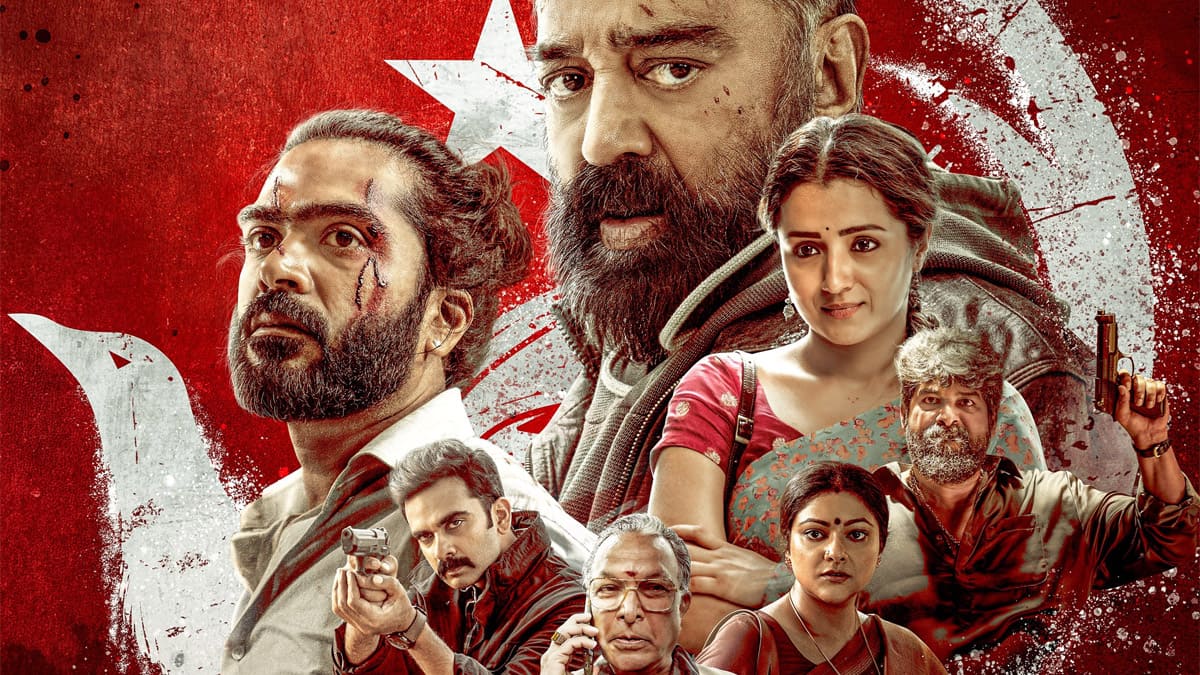
Thug Life Review: Thug Life, released in theaters worldwide on June 5, 2025, marks a highly anticipated creative reunion between Kamal Haasan and Mani Ratnam, nearly four decades after their much-celebrated collaboration on Nayakan (1987). While Nayakan was loosely inspired by the real-life Bombay don Varadarajan Mudaliar and drew narrative parallels from The Godfather (1972), Thug Life ventures into a different terrain: the underbelly of New Delhi. Both films, however, share a common thread: a deep engagement with the gangster genre, exploring power, identity, and the cost of violence.
What distinguishes Thug Life is its Shakespearean undercurrent. Though not a direct adaptation, the film borrows thematically from multiple tragedies by William Shakespeare – most notably Macbeth. In fact, its closest spiritual cousin in Indian cinema might be Vishal Bhardwaj’s Maqbool (2003), which transposed Macbeth into the Mumbai underworld with remarkable psychological depth. Rangaraaya Sakthivel Naicker (Kamal Haasan) bears resemblance to Pankaj Kapur’s Abbaji in Maqbool, while Silambarasan’s Amaran echoes Irrfan Khan’s haunted Maqbool. But Thug Life doesn’t succeed in living up to the artistic and narrative potential of a film like Maqbool – especially given its themes, cast, and creators.
The film opens with a black-and-white prologue showing young Amaran and his sister Chandra being separated during a crossfire between a gang and the police force. Sakthivel, a gang leader played by Kamal Haasan, adopts Amaran and vows to reunite the siblings. It’s a scene meant to anchor emotional investment, but the film’s weak and uninspired writing – especially once the story moves to the present day – quickly undercuts that early promise. The narrative feels outdated and largely derivative. Familiar beats from countless gangster dramas resurface, with little innovation in how they are presented.
Style and Stardom Outweigh Substance
Where Maqbool was grounded in character, Thug Life surrenders too easily to star-centric demands, with the script bending to accommodate its lead actors rather than serving the story. Kamal Haasan’s Sakthivel is written with reverence but lacks depth or complexity. Silambarasan’s Amaran, however, benefits from a comparatively nuanced arc and is perhaps the only character in the film with any psychological layering.
An assassination attempt scene before the interval attempts to evoke both ‘Julius Caesar’ and biblical imagery of betrayal and crucifixion, but it lands without the intended weight. What follows is an escape and survival sequence, reminiscent of The Revenant (2015 film) but lacking its visceral impact. The sequence stretches credibility and feels more like indulgent fantasy than part of a grounded narrative.
In the second half, Sakthivel returns from a Buddhist monastery transformed – now a martial arts master with a new look and philosophy. This reinvention is unconvincing and often comes across as ridiculous.
A major letdown is the film’s indulgence in over-the-top, stylized action sequences, embracing the current trend of hyper-violent set pieces – but without the narrative depth to justify them, making the experience often tiring and distasteful.
Female characters in the film are relegated to the margins, with no real agency or depth. They appear as love interests, victims, or passive observers, and none leave a lasting impression. Despite a large ensemble cast featuring Trisha, Abhirami, Aishwarya Lekshmi, and others, their roles are mostly ornamental.
The sound work by Chief Re-Recording Mixer Craig Mann and Sound Designer Anand Krishnamoorthi is notable – one example is the haunting, echoing chatter of people at the chawl where Amaran lost his father. This recurring sound motif, evoking Amaran’s childhood memory and trauma, appears at key moments in the film, including during A. R. Rahman’s song ‘Anju Vanna Poove’. However, these technical strengths can’t make up for the fundamental weaknesses in the script. Mani Ratnam and Kamal Haasan co-wrote the film, but the writing lacks the sharpness and economy that once defined their best work.
Ultimately, Thug Life feels like a missed opportunity, undone by its reluctance to challenge its own star-driven impulses. While it aims for operatic tragedy, it ends up delivering melodrama. There are sparks of ambition and some earnest performances, but the film lacks cohesion, restraint, and freshness.
It’s not that Thug Life had nothing to say – it’s that it says it in ways we’ve seen too many times before, and often with less conviction.
Disclaimer: This content was automatically imported from a third-party source via RSS feed. The original source is: https://www.filmibeat.com/tamil/reviews/2025/thug-life-review-kamal-haasan-mani-ratnam-reunion-misfires-gangster-tragedy-lacks-narrative-bite-463659.html. xn--babytilbehr-pgb.com does not claim ownership of this content. All rights remain with the original publisher.